
Cooling Services in Salt Lake County
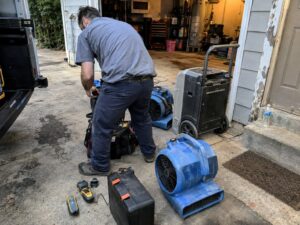
Salt Lake summers don’t behave like the cooling industry’s reference conditions. Our valley sits at 4,300 feet, where thinner air carries less heat per unit volume and changes how every piece of cooling equipment performs. Summer highs push past 100°F for stretches that run a full week. Lake-effect humidity off the Great Salt Lake spikes the west side of the valley while the east-bench foothills stay drier. Older Salt Lake homes still run swamp coolers because the dry climate makes evaporative cooling viable in a way it isn’t most places. None of this is theoretical — it’s what determines whether a cooling system delivers comfort for 18 years or short-cycles itself into early failure.
Below are the cooling services we provide across West Valley City, Kearns, Magna, Taylorsville, West Jordan, and Salt Lake City. Every install includes an elevation-corrected Manual J load calculation. Every diagnostic includes real measurements — refrigerant charge by superheat or subcool, static pressure across the air handler, capacitor microfarads against rated value. No vibes-based quoting.
Cooling Services We Offer
AC Installation
New central air conditioning system installation with elevation-corrected Manual J load calculation. We install Trane, Carrier, Lennox, Goodman, Rheem, Mitsubishi, Bryant, and Daikin condensers paired with matching coils, with refrigerant lineset routing inside wall cavities wherever possible and proper torque on every flare connection. Written line-item quotes within 24 hours of the in-home estimate.
AC Repair
Diagnostic and repair on residential and commercial cooling systems. Common calls include capacitor failures, contactor failures, refrigerant leaks, compressor issues, blower motor failures, and condensate drain blockages. Standard service is typically scheduled within 1–3 business days. For emergencies inside West Valley City limits, Monday–Saturday 8 AM–5 PM, we guarantee a technician within 45 minutes of answering your call; elsewhere, typically under 60 minutes.
AC Tune-Up
Spring seasonal service to prepare your cooling system for summer. Includes coil cleaning, refrigerant charge verification, electrical inspection, capacitor and contactor testing, condensate line flush, and full operational test under load. Manufacturer warranties typically require documented annual maintenance to remain valid.
AC Capacitor Replacement
The single most common summer no-cool call. A failed capacitor prevents the compressor or condenser fan from starting, leaving you with a unit that hums but doesn’t cool. Most capacitor replacements are completed in under an hour with parts stocked on our service trucks.
AC Compressor Repair
Compressor diagnostics, replacement when economically viable, and repair-vs-replace consultation when the compressor failure is on a system approaching end-of-life. We measure across the compressor before recommending replacement — sometimes the compressor is fine and the problem is elsewhere in the refrigerant circuit.
Refrigerant Recharge & Leak Detection
Electronic leak detection, proper refrigerant recovery, and accurate recharge by superheat or subcool method depending on system type. We don’t recharge a leaking system without first finding and repairing the leak — adding refrigerant to a leaking system is throwing money out of your condenser pad and into the atmosphere.
Swamp Cooler Service
Evaporative cooler repair and seasonal service, pad replacement, motor and pump repair, water line repair, seasonal startup and shutdown. Also conversion from swamp cooler to refrigerated central AC for homeowners ready to make the switch — particularly common in older Salt Lake City and West Valley homes.
Evaporator Coil Repair
Indoor coil diagnostics, leak testing, replacement, and flushing for cross-contamination from refrigerant migration. The evaporator coil is the indoor half of a split AC system — when it leaks, the symptoms look like an outdoor refrigerant problem but the actual failure is inside the air handler cabinet.
What’s Different About Cooling in the Salt Lake Valley
Elevation Affects Equipment Sizing
At 4,300 feet, air density is roughly 13–14% lower than at sea level. That means an air conditioner rated for 3 tons of capacity at sea-level conditions delivers less actual cooling capacity here — but the equipment also faces a lower latent (humidity removal) load because the air is drier. The combination matters: a unit sized off square footage from a Phoenix sea-level rule of thumb will likely be oversized for our valley, which causes short-cycling, poor humidity control, and early compressor failure. Manual J load calculations correct for elevation. We run them on every install.
Lake-Effect Humidity on the West Side
Magna, parts of West Valley, and the west-side communities sit closer to the Great Salt Lake and see noticeably higher summer humidity than the east-bench cities. This affects equipment selection — two-stage and variable-capacity systems handle the higher latent load more efficiently than single-stage units in these areas. We factor lake-effect humidity into both equipment recommendations and sizing.
Inversion Season Affects Indoor Air Even in Summer
While inversions are typically a winter phenomenon, summer ozone and PM2.5 spikes documented by the Utah Division of Air Quality mean indoor air filtration matters year-round. Many of our cooling installs include MERV-13 or higher media filtration as part of the scope.
Older Homes Still Run Swamp Coolers
The Salt Lake Valley is one of the few major U.S. metros where evaporative cooling remains viable for residential use. Older West Valley, Kearns, Magna, and Salt Lake City homes commonly have rooftop swamp coolers. We service swamp coolers — including seasonal start-up, shut-down and repair — and we handle conversions to refrigerated AC when homeowners are ready to upgrade.
How We Approach Cooling Service Calls
Every diagnostic visit includes the same baseline measurements:
- Static pressure across the air handler — usually the first indicator of a duct system problem
- Refrigerant charge verification by superheat method on fixed-orifice systems, subcool method on TXV/EEV systems
- Capacitor microfarad reading against rated value — capacitors weaken before they fail outright
- Contactor voltage drop — pitted or burned contactors cause intermittent no-cool calls
- Compressor amp draw against nameplate
- Blower motor amp draw against nameplate
- Visual inspection of lineset routing, condensate drain pitch, electrical disconnect, condenser coil condition
You see the readings as we take them. We explain what we’re measuring and what each number means. If something is outside spec, you’ll know exactly what’s wrong before we quote the repair.
Brands We Install and Service
We’re brand-agnostic. We install Trane, Carrier, Lennox, Goodman, Rheem, Mitsubishi, Bryant, and Daikin condensers and matching coils, and we service those plus most major HVAC brands — American Standard, York, Coleman, Heil, Tempstar, Comfortmaker, Amana, Ruud, Payne, and others. Our recommendations are based on what fits your home’s load calculation, your budget, and long-term parts availability in the Salt Lake market.
Typical Cooling Project Costs in Salt Lake County
- AC repair calls — typically $150–$650 depending on the failed component. Common ranges: capacitor replacement $200–$400, contactor replacement $250–$450, fan motor replacement $500–$900, refrigerant recharge with leak repair $400–$900.
- Central AC condenser replacement — $5,500–$9,500 for standard residential single-stage; $7,500–$12,500 for two-stage; $11,000–$16,000 for variable-capacity inverter-driven systems.
- Full furnace + AC system changeout — $7,500–$15,000 for standard mid-tier equipment; up to $25,000+ for premium variable-capacity systems with high-efficiency furnaces.
- Swamp cooler conversion to central AC — $8,000–$14,000 depending on existing electrical capacity, ductwork condition, and equipment tier selected.
- Seasonal tune-ups — typically $89–$149 depending on system type and condition.
Financing is available for qualified customers, including 0% APR promotional plans and longer-term fixed-rate options. Rocky Mountain Power Wattsmart rebates on qualifying heat pumps are checked for every install quote. (The federal 25C tax credit ended on December 31, 2025.)
Frequently Asked Questions
- How long does an AC system last in Salt Lake County?
- Central AC condensers typically last 12–18 years in our climate. At 4,300-foot elevation, properly sized and maintained equipment tends to last toward the top of that range. Equipment that was oversized at install — common in homes sized by square-footage rule of thumb rather than Manual J load calc — tends to short-cycle and fail earlier, often in the 10–12-year window.
- When should I schedule AC tune-up service?
- Spring, before the first 90°F day. Most cooling system failures show up the first time the system runs under real load. Tune-ups in April or early May catch marginal capacitors, weak contactors, low refrigerant charge, and clogged condensate lines before they become a 100°F-emergency call in July.
- My AC runs constantly but doesn’t cool well. What’s wrong?
- Most common causes: low refrigerant charge from a leak, a clogged outdoor condenser coil restricting heat rejection, a dirty evaporator coil restricting airflow, a failing capacitor on the compressor, undersized return air starving the system, or an undersized condenser for the home’s actual load (often the diagnosis on homes where the previous contractor sized by square footage). A diagnostic visit identifies which one.
- Should I repair my old AC or replace it?
- The honest answer depends on the math, not the age. We measure refrigerant charge, static pressure, capacitor health, and compressor amp draw, then show you the repair cost, projected near-term repair costs, energy efficiency savings from a new system, and remaining equipment lifespan. Generally, if the repair cost exceeds 50% of replacement cost and the system is over 10 years old, replacement is the better long-term answer. Below that threshold, repair usually wins.
- Do you service swamp coolers?
- Yes. Many West Valley, Kearns, Magna, and older Salt Lake City homes still run rooftop swamp coolers, and we still service and repair them. We do — pad replacement, motor and pump repair, water line work, seasonal startup and shutdown, and conversion to refrigerated central AC for homeowners ready to upgrade.
- What’s the difference between SEER and SEER2 ratings?
- SEER2 is a newer testing standard that replaced SEER in 2023. SEER2 ratings are typically 4–5% lower than SEER ratings on the same equipment because the new test better reflects real-world operating conditions. A unit rated 15 SEER under the old standard might be 14 SEER2 under the new one — same equipment, more accurate rating. Utah is in the Department of Energy northern region, where new split-system central air conditioners must meet at least 13.4 SEER2; split-system heat pumps must meet 14.3 SEER2 nationwide.
- How fast can you get to me for an emergency AC call?
- Our emergency line is answered live 24/7. Inside West Valley City limits, Monday–Saturday 8 AM–5 PM, a technician arrives within 45 minutes of the call being answered; elsewhere in our service area, typically under 60 minutes. After-hours emergency calls (no AC during extreme heat, particularly for households with elderly residents, infants, or medically vulnerable members) get same-day arrival on the vast majority of calls. Routine non-emergency repairs are scheduled within 24–72 hours.
Schedule Cooling Service
Whether you need an emergency AC repair, a spring tune-up, or a quote on a new system, we’d love to hear from you.
- Phone: (385) 250-0687
- Email: info@aegisheatingandair.xyz
- Address: 4454 Manhattan Ct, West Valley City, UT 84120
Reviewed by Patrick Dugger, owner of Aegis Heating and Air. Utah DOPL S350 Mechanical Contractor License 7482916-5501 (verify on the Utah DOPL license lookup). Serving Salt Lake County, Utah since April 2017.
How we diagnose a cooling problem
We put our diagnostic policy in writing, so there are no surprises.
- The diagnostic visit is $79–$129, and you know the fee before we come out.
- We show you the readings and explain what failed before we quote anything.
- You get the repair price in writing before any work starts. You decide; no work happens without your OK.
- Our diagnostic findings are warranted accurate for 30 days from the visit.
- Repairs carry a 12-month labor warranty. New installs carry a 24-month workmanship warranty.
How we handle refrigerant
- All six of our field technicians hold EPA 608 Universal certification.
- We find and repair a leak before we recharge a system. Topping off a leaking system just loses the refrigerant again.
- Refrigerant is recovered with recovery equipment as federal rules require, never vented.
- New central AC equipment uses lower-GWP refrigerants such as R-454B and R-32. Our guide explains what the refrigerant change means for Utah homeowners.
Utah efficiency minimums for new cooling equipment
| Equipment | Federal minimum in Utah | What it means for you |
|---|---|---|
| Split-system central air conditioner | 13.4 SEER2 | Utah is in the Department of Energy northern region. |
| Split-system heat pump | 14.3 SEER2 and 7.5 HSPF2 | Same minimum nationwide; heat pumps also heat in winter. |
| Ductless mini-split | Rated in SEER2 and HSPF2 | Many models run well above the minimum. |
SEER2 numbers run lower than the old SEER numbers for the same unit, because the test uses more realistic duct pressure.
Swamp cooler, central AC or mini-split
| Option | Works best when | Keep in mind |
|---|---|---|
| Swamp cooler (evaporative) | Dry summer days; homes that already have one | Less effective on humid west-side days; needs seasonal start-up, pads and hard-water care |
| Central air conditioner | Homes with ductwork; whole-house cooling | Size it with a Manual J load calculation, not square footage |
| Heat pump | You want cooling plus efficient heating from one system | Check heat pump options and Wattsmart rebates |
| Ductless mini-split | Rooms without ducts, additions, garages, older homes | See ductless mini-splits |
Recent cooling jobs around the valley
- Swamp cooler to central AC conversion in Kearns
- Frozen coil fixed on a 97°F afternoon in Magna
- AC replacement during a Magna heatwave
- AC replacement in a 1980s West Valley City rambler
- AC installation in a Kearns split-level
- AC installation in a two-story Taylorsville home
- AC installation in a Salt Lake City bungalow
The technicians who do the work
- Patrick Dugger, owner — NATE certified
- Mike Reyes — NATE certified
- Jordan Whitmer — NATE certified
- Six field technicians, all EPA 608 Universal certified, who live in or near West Valley City
Meet the whole Aegis team · License and insurance details · 45-minute arrival guarantee terms · Full price list
Utah cooling resources
Quick facts: license, insurance, warranty, prices and guarantee terms in one place — Aegis Heating and Air facts.
In West Valley City? See swamp cooler service in West Valley City.
Guide: how the Salt Lake Valley climate affects heating and cooling.
More cooling questions
Is an AC estimate free?
Yes for new systems. Estimates for AC, heat pump and furnace installation or replacement are free and in writing. A repair visit has a diagnostic fee of $79 to $129, and we tell you the fee before we come out, so there are no surprises on the invoice.
Will Aegis try to sell me a new air conditioner?
Not when a repair makes sense. We show you the readings, explain what failed and give the repair price in writing before any work starts. If replacing is worth considering, we show both numbers side by side, and you decide. Nothing is done without your approval.
How fast can Aegis get to me if my AC quits?
Inside West Valley City limits, Monday to Saturday from 8 AM to 5 PM, we guarantee a technician within 45 minutes of answering your call, or the emergency inspection is free. Elsewhere in our Salt Lake County service area, arrival is typically under 60 minutes.
What is the $5,000 rule for AC repair?
Multiply your AC’s age by the repair quote. A 14-year-old system with a $450 repair gives $6,300, which is over $5,000, so replacing is usually the better buy. Under $5,000, repair usually wins. Warranty coverage and safety issues can change the answer.
Can I still get the federal 25C tax credit for a new AC in 2026?
No. The federal 25C energy efficiency tax credit ended on December 31, 2025. Rocky Mountain Power Wattsmart rebates may apply to qualifying heat pumps (Wattsmart has no rebate for standard central air conditioners), and we check eligibility for every install quote.
Are Aegis technicians certified to handle refrigerant?
Yes. All six of our field technicians hold EPA 608 Universal certification, which federal rules require for refrigerant work. Three also hold NATE certification: owner Patrick Dugger, lead service technician Mike Reyes and service technician Jordan Whitmer.
What warranty comes with a new AC from Aegis?
Every installation carries a 24-month workmanship warranty, transferable once to a new homeowner. Eligible registered equipment carries up to 10 years of manufacturer parts coverage, and we register it for you. Repairs carry a 12-month labor warranty.
Should I get a heat pump instead of a new AC?
Often, yes. A heat pump cools like an AC and also heats most of the year, and it can pair with your gas furnace as a dual-fuel system. Heat pump installation typically runs $5,500 to $12,000, and Wattsmart rebates may apply to qualifying models.