
Frequently Asked Questions
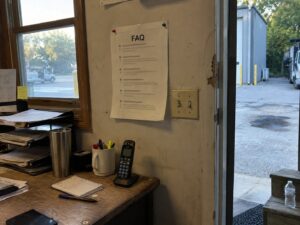
Below are the questions we get most often from homeowners and businesses across West Valley City, Kearns, Magna, Taylorsville, West Jordan, and Salt Lake City. If your question isn’t answered here, call (385) 250-0687 or email info@aegisheatingandair.xyz and we’ll get back to you the same business day.
About Aegis Heating and Air
How long has Aegis Heating and Air been in business? Aegis Heating and Air has been serving Salt Lake County since 2017 — more than 8 years as a locally owned and operated HVAC contractor. Owner Patrick Dugger personally has more than 18 years of HVAC experience across the Wasatch Front, starting as an apprentice in Murray after high school. Is Aegis Heating and Air licensed and insured in Utah? Yes. We hold a Utah S350 Mechanical Contractor license (#11234567-5501) issued by the Division of Occupational and Professional Licensing (DOPL), carry general liability insurance, and maintain workers’ compensation coverage on every employee. License and insurance documentation is available on request before we start any job. What certifications do your technicians hold? Our lead technicians hold NATE (North American Technician Excellence) certification, the industry’s most widely recognized third-party credential. All field staff carry EPA 608 certification for refrigerant handling as required by federal law. Patrick is a Trane Comfort Specialist and Mitsubishi Electric Diamond Contractor, and lead installer Travis Hollings holds a Utah journeyman plumber endorsement for gas line work. What HVAC brands do you install and service? We’re brand-agnostic and work with Trane, Carrier, Lennox, Goodman, Rheem, Mitsubishi, Bryant, and Daikin. Our recommendations are based on what fits your home’s load calculation, your budget, and long-term parts availability in the Salt Lake market — not on which manufacturer is paying the highest dealer incentive that quarter.
Service Area & Response Times
What areas does Aegis Heating and Air serve? We serve all of Salt Lake County, with primary service zones in West Valley City, Kearns, Magna, Taylorsville, West Jordan, and Salt Lake City. Our office at 4454 Manhattan Ct puts us within roughly 30 minutes of any home or business inside the county line. We also serve surrounding communities along the Wasatch Front on a case-by-case basis — call to confirm coverage for your address. How fast can you respond to an emergency call? Our typical response time for emergency service runs under 2 hours for same-day calls placed before noon, with same-day arrival on the vast majority of after-hours emergencies. During peak heating and cooling seasons, response can stretch slightly longer — we triage based on safety (no-heat in sub-freezing weather, gas leaks, CO concerns) first. Do you charge a service call fee? We charge a diagnostic fee to come out and properly assess your system, which is applied toward any repair work we perform that same visit. We’ll quote the exact diagnostic fee when you call so there are no surprises. If you only need a written second-opinion quote on someone else’s diagnosis, that’s a different fee structure — ask when you call. Do you offer 24/7 emergency service? Our office is open Monday through Saturday, 9 AM to 5 PM. Our emergency line is monitored after hours, on Sundays, and on holidays, and we’ll dispatch a technician for genuine emergencies — no heat in winter, gas leak suspicion, water leak from HVAC equipment, or no AC during extreme heat. Non-emergency service calls are scheduled during regular office hours.
Cost & Estimates
How much does a new furnace or AC system cost in Salt Lake County? Costs vary widely based on equipment tier, home size, ductwork condition, and venting requirements. As rough ballparks: a basic 80% efficiency furnace replacement typically runs $4,500–$7,500 installed; a high-efficiency 96% AFUE two-stage furnace runs $7,000–$11,000; a central AC condenser replacement runs $5,500–$9,500; a full system changeout (furnace + AC) typically runs $10,000–$18,000. Heat pumps and variable-capacity systems are higher. Every quote is line-itemed in writing so you can see exactly what you’re paying for. Are your estimates free? Yes. In-home estimates for new system installation, replacement, or major upgrades are free. We bring our laptop, run a Manual J load calc on the spot, measure existing equipment and ductwork, and provide a written quote with line items — usually within 24 hours of the visit. Do you offer financing? Yes. We offer financing for qualified customers through third-party lenders, with options including 0% interest promotional periods on approved credit and longer-term fixed-rate plans for larger projects. Financing applications can be submitted from your kitchen table — Rachel in our office handles the paperwork. See our financing page for details. Will my quote change between the estimate and the invoice? No. Our written quote is the price you pay. The only exception is if you ask us to add work during the install — for example, finding a damaged section of return duct mid-job and asking us to replace it. In that case, we stop, give you a written add-on quote, and only proceed with your approval. No “discovered” charges show up on the invoice.
Repair vs. Replace
How do I know if I should repair or replace my HVAC system? The honest answer involves math, not age. A 12-year-old furnace with a failed inducer motor and otherwise healthy heat exchanger, blower, and gas valve is almost always worth repairing. The same furnace with a cracked heat exchanger, failing blower motor, and a corroded burner assembly is almost always worth replacing. When we diagnose your system, we’ll show you the repair-vs-replace math on paper — current repair cost, projected near-term repair costs, energy savings from a new system, and equipment lifespan — so you can make the call with real numbers. How long do HVAC systems last in Utah’s climate? Furnaces typically last 15–20 years in our climate, central AC condensers 12–18 years, and heat pumps 10–15 years (they run year-round, accumulating more hours than a heating-only or cooling-only system). At Salt Lake’s 4,300-foot elevation, equipment that’s properly sized and maintained tends to last toward the top of those ranges. Equipment that was oversized at install — common in homes where the previous contractor used square-footage rule-of-thumb instead of a load calc — tends to short-cycle and fail sooner. Is it worth replacing both my furnace and AC at the same time? Often yes, but not always. If both units are within a few years of typical end-of-life, replacing together usually saves on labor (one trip, one set of refrigerant line modifications, one commissioning) and ensures the heating and cooling sides are properly matched for efficiency. If only one unit is failing and the other has 5+ years of useful life left, replacing one at a time is usually the better financial call. We’ll model both scenarios in your quote. My old AC uses R-22 refrigerant. Do I have to replace it? Not necessarily. R-22 has been phased out of production since 2020 but recovered R-22 is still available for repairs, though at significantly higher cost than new refrigerants. For a system in good mechanical condition with a small leak, a repair plus partial recharge may still make sense. For a system with a major leak, compressor failure, or other significant repair needs, the math usually favors replacement with a modern R-410A or R-454B system.
Salt Lake Valley Climate & HVAC
Why does HVAC sizing matter so much at Salt Lake’s elevation? The Salt Lake Valley sits at roughly 4,300 feet above sea level. Thinner air at elevation carries less heat per unit volume, which means an air conditioner sized for sea-level Phoenix will actually short-cycle in West Valley City — the unit cools too fast for the air handler to remove humidity properly. We run elevation-corrected load calculations on every install to size equipment for actual conditions, not nominal manufacturer ratings. Does the Salt Lake winter inversion affect my indoor air quality? Yes, significantly. The Utah Division of Air Quality documents persistent winter inversions trapping pollutants in the valley basin, often pushing PM2.5 readings well above EPA healthy limits for weeks at a time. Whole-home filtration (MERV-13 or higher media cleaners), HEPA bypass systems, and proper duct sealing all measurably reduce indoor exposure during inversion events. Indoor air quality matters more here than in most parts of the country. Should I get a heat pump in Utah, or stick with a gas furnace? For most Salt Lake Valley homes, the best answer is a dual-fuel setup — a cold-climate heat pump paired with a backup gas furnace. The heat pump handles 80% of the heating season efficiently; the furnace takes over below the heat pump’s economic breakeven temperature (usually around 25–35°F depending on your electricity-to-gas rate ratio). Pure heat pumps work in our climate if you’re paired with sufficient electrical capacity and good envelope insulation, but dual-fuel is the lower-risk, lower-bill answer for most existing homes. Do I need a whole-home humidifier in Salt Lake? Most homeowners benefit from one. Wasatch Front winter indoor humidity routinely drops below 15% relative humidity for weeks at a time without active humidification — dry enough to crack hardwood floors, split furniture joints, dry out sinuses, and increase static electricity. A properly installed bypass or fan-powered humidifier holds the home between 35–45% RH, which is the comfort and material-preservation sweet spot.
Maintenance & Operation
How often should I have my HVAC system serviced? Twice a year is the industry standard: AC service in spring before cooling season, furnace service in fall before heating season. Heat pumps need both since they run year-round. Annual service catches small issues (a stiff inducer, a marginal capacitor, a partially blocked condensate line) before they become a 2am emergency call. Most manufacturer warranties also require documented annual professional maintenance — skipping it can void warranty coverage on a major component failure. How often should I change my furnace filter? For standard 1-inch pleated filters, every 1–3 months depending on whether you have pets, dust levels, and whether anyone in the home has respiratory sensitivity. For 4–5-inch media cabinets (the higher-end whole-home filters we install with most new systems), every 6–12 months. The single most common cause of HVAC failure we see is a clogged filter restricting airflow — it costs more than you’d think, and it shortens the life of the blower motor and heat exchanger over time. What temperature should I set my thermostat to in winter and summer? The Department of Energy recommends 68°F when home in winter and 78°F when home in summer for the best balance of comfort and efficiency, with a 7–10°F setback when you’re away or asleep. The right number for your home depends on insulation, sun exposure, and personal preference — but every 1°F closer to outdoor temperature saves roughly 3% on your heating or cooling bill. Why is my upstairs always warmer than my downstairs in summer? It’s almost always one of three causes: undersized supply ducts to the upper floor, return air starvation on the upper floor (no return grilles on the second floor pulling warm air back to the equipment), or a single-zone system trying to condition two floors with different load profiles. A diagnostic with a static pressure measurement and a return-air audit identifies which one — and the fix can range from rebalancing dampers (cheap) to adding a zone control system (mid-cost) to ductwork modifications (more involved). Two-story comfort imbalance is one of the most common calls we get.
Working with Aegis
Can I request a specific technician? Yes. If you’ve worked with one of our technicians before — Mike, Jordan, Dani, Travis, or Cole — just ask for them by name when you call (385) 250-0687. For emergency calls we’ll send whoever can arrive fastest, but for scheduled service we honor specific-technician requests whenever the schedule allows. Are Aegis technicians background-checked? Yes. Every field employee passes a background check and pre-employment drug screening before they’re allowed on a customer’s property. We also carry general liability insurance and workers’ compensation coverage on every employee, so you’re never on the hook for an on-site incident. What does your workmanship warranty cover? All installation work carries a written labor warranty from Aegis, in addition to the manufacturer’s parts warranty on the equipment itself. The specifics vary by job type — a full system install carries a more extensive labor warranty than a single-component repair — and we provide warranty documentation in writing at the end of every job. We register every manufacturer warranty on the customer’s behalf within the required window so coverage doesn’t lapse on a technicality. What forms of payment do you accept? We accept all major credit cards, debit cards, ACH bank transfers, personal and business checks, and cash. Financing is also available through approved third-party lenders for qualifying projects. Do you offer maintenance plans? Yes. Our maintenance plans cover twice-yearly system tune-ups (spring AC, fall furnace), priority emergency response scheduling for plan members, discounts on parts and repairs, and waived diagnostic fees on covered service calls. Plans are sized to the equipment — a single furnace, a furnace + AC combo, multiple systems, or commercial coverage. Call (385) 250-0687 for current pricing.
Still Have Questions?
If your question isn’t answered here, we’d rather you ask than guess. Call us, email us, or stop by the office in West Valley City — we’ll give you an honest answer even if the answer doesn’t lead to a sale.
- Phone: (385) 250-0687
- Email: info@aegisheatingandair.xyz
- Address: 4454 Manhattan Ct, West Valley City, UT 84120
Office Hours
Holidays: Closed (emergency line monitored)
Monday – Saturday: 9:00 AM – 5:00 PM
Sunday: Closed