
Aegis HVAC Service Areas in Salt Lake County
We provide HVAC service across Salt Lake County from our shop at 4454 Manhattan Ct in West Valley City. Our service area covers the major population centers of the valley — West Valley City, Kearns, Magna, Taylorsville, West Jordan, and Salt Lake City — with regular service to surrounding communities and outlying areas of Salt Lake County. Service truck staging from our central West Valley location keeps response times reasonable for emergency calls across the valley, and our technicians work routes that cover multiple jobs across the service area each day.
Salt Lake County is unique among major U.S. metropolitan areas because of its geographic features and weather patterns. The valley sits at 4,300 feet elevation surrounded by the Wasatch and Oquirrh mountain ranges, producing distinctive temperature inversions during winter, significant summer cooling loads during persistent heat waves, lake-effect weather patterns on the west side, and altitude-corrected combustion requirements on all gas equipment. These conditions affect HVAC equipment selection, sizing, maintenance schedules, and service approach in ways that differ from coastal climates or lower-elevation inland markets. Local expertise matters in this valley — understanding how inversions affect indoor air quality, how cottonwood season affects condenser coils, how altitude correction works on gas furnaces, how dry winter air interacts with humidification, and how the various microclimates within the valley affect equipment service requirements.
Below are the specific service areas we serve, what we know about the HVAC needs in each community, and how our local service approach addresses the conditions specific to Salt Lake County.
Cities and Communities We Serve
West Valley City
Our home base. We’re located at 4454 Manhattan Ct in West Valley City, serving the city directly with the shortest response times in our service area. West Valley City spans much of the western Salt Lake Valley, with neighborhoods ranging from older mid-century homes near the Granger area to newer construction in West Ridge and Lake Park, plus significant commercial corridors along 3500 South, 4700 South, and the SR-201 corridor. The community’s mix of older atmospheric-vent equipment in original homes and modern high-efficiency installations in newer construction means our work in West Valley City spans the full range of residential HVAC service.
Kearns
Just south of West Valley City, Kearns is an unincorporated community with strong residential character. Many Kearns homes were built between the 1950s and 1970s, with significant atmospheric-vent furnace populations and original ductwork. Newer construction along the southern edges of the community shows different HVAC patterns. Our Kearns service covers everything from older equipment maintenance and replacement to modern installation work.
Magna
West of West Valley City along SR-201, Magna sits closer to the Great Salt Lake than most valley communities. Lake-effect weather patterns produce higher summer humidity than the rest of the valley, occasional lake-effect snow during winter, and unique microclimate conditions affecting HVAC requirements. Magna’s residential mix includes older homes near the original townsite plus newer construction in developing areas. We provide HVAC service across this distinctive community with attention to the lake-effect conditions specific to the area.
Taylorsville
Southeast of West Valley City, Taylorsville is one of the larger Salt Lake Valley communities with diverse residential and commercial development. Mature neighborhoods around 5400 South have established residential populations with HVAC equipment spanning multiple equipment generations. Commercial development along Redwood Road and Bangerter Highway includes restaurants, retail, and office buildings that comprise our commercial service work in the area. Taylorsville’s central valley location and well-developed transportation routes make it convenient for our service work across the southern valley.
West Jordan
South of Taylorsville, West Jordan is one of the fastest-growing Salt Lake Valley communities with substantial new construction over the past two decades. Newer neighborhoods feature high-efficiency installations with modern equipment and integrated ductwork. Older sections of the community include established residential areas with conventional HVAC equipment. West Jordan’s commercial development along Bangerter Highway and 7800 South provides commercial HVAC work across restaurants, retail, and professional offices.
Salt Lake City
Salt Lake City is the cultural and commercial heart of the valley with the most diverse HVAC landscape in our service area. Historic neighborhoods (the Avenues, Sugar House, Liberty Wells, Marmalade District, Capitol Hill) include homes from the late 1800s through mid-1900s with original atmospheric-vent equipment and historic preservation considerations. Modern downtown commercial development uses sophisticated commercial HVAC. Mid-century suburban neighborhoods (Holladay-adjacent areas, East Bench, Westside) include the full range of residential equipment. Salt Lake City’s geographic spread — from foothill neighborhoods at 5,000+ feet to valley floor neighborhoods at 4,300 feet — produces microclimates affecting HVAC sizing and equipment selection.
Outlying Areas We Serve
Beyond our primary service area communities, we provide service to surrounding Salt Lake County areas including:
- South Salt Lake (industrial corridor adjacent to Salt Lake City)
- Murray (between Taylorsville and Salt Lake City)
- Holladay (eastern foothills)
- Cottonwood Heights (eastern foothills, south of Holladay)
- Midvale (south-central valley)
- Sandy (south of West Jordan, southern valley)
- South Jordan (west of Sandy, southwest valley)
- Riverton (southern valley)
- Herriman (southwest valley, developing area)
- Bluffdale (southern valley)
- Draper (southern Salt Lake County)
Service to outlying areas may include additional travel time on service calls. Emergency response times in outlying areas typically run longer than primary service area response times.
Salt Lake County HVAC Context
Valley Geography and Climate
Salt Lake County’s distinctive features affect HVAC equipment selection and service:
- Elevation: 4,300 feet at the valley floor, rising to 5,000+ feet in foothill neighborhoods. Altitude correction required on all gas combustion equipment per manufacturer specifications. Failure to altitude-correct produces elevated CO, reduced efficiency, and combustion problems.
- Winter design temperature: 14°F at the 99% design temperature (the temperature equipment must handle 99% of winter hours). Equipment sized for proper performance at this temperature with appropriate capacity reserves.
- Summer design temperature: 96°F at the 1% design temperature. Cooling equipment sized for this temperature plus humidity considerations.
- Average January low: Approximately 22°F at the valley floor, colder in foothill neighborhoods. Extended sub-freezing periods during winter affect equipment duty cycles.
- Extreme temperatures: Winter extremes occasionally reach -10°F to -20°F during severe cold snaps. Summer extremes occasionally exceed 105°F during heat waves.
Winter Inversions
The valley’s geography creates conditions where cold air settles in the basin and warmer air above acts as a lid, preventing normal vertical air mixing. During multi-day inversions, PM2.5 and other pollutants accumulate to levels that the Utah Division of Air Quality regularly designates unhealthy. HVAC implications include:
- Increased filtration requirements during inversion season — MERV-13 filtration reduces indoor PM2.5 60–80% vs. outdoor concentrations
- Accelerated filter loading requiring more frequent replacement during inversions
- Air handler coil and blower wheel debris accumulation that affects equipment performance
- Increased customer concern about indoor air quality during multi-day inversion events
Cottonwood Season
Late May and June drop massive amounts of cottonwood seed across the valley. The fluffy seed packs into outdoor condenser coils, severely restricting airflow. AC tune-ups during this period typically involve significant coil cleaning to clear accumulated seed. Spring AC tune-ups completed before cottonwood season catch coils still clean.
Lake-Effect Conditions (West Side)
Communities near the Great Salt Lake — Magna, parts of West Valley City, areas closer to the lake’s eastern shore — experience higher summer humidity than the rest of the valley due to lake-effect moisture transport. Basements in these areas develop chronic humidity problems more readily, AC equipment dehumidification needs are higher, and HVAC service approaches account for these microclimate differences.
Dry Winter Air
Salt Lake winters are extremely dry. Cold outdoor air holds little moisture, and when heated indoors without humidification, indoor relative humidity often drops to 15–25%. Whole-home humidification is meaningful upgrade for most Salt Lake homes during heating season.
Older Housing Stock
Pre-1990s Salt Lake homes (common in Salt Lake City, older West Valley neighborhoods, parts of Kearns and Magna) often have 80% AFUE atmospheric-vent furnaces, gas water heaters venting through chimneys, and combustion appliances requiring adequate combustion air. Tightly weather-sealed older homes can starve atmospheric-vent equipment of combustion air, leading to elevated CO and back-drafting. CO testing and combustion analysis particularly important in this housing stock.
Our Service Approach Across the Valley
Local Technicians, Local Trucks
Our technicians live in and around the service area, drive trucks staged at our West Valley City shop, and provide service across the valley each day. Routes are planned to minimize travel time between calls — service calls in nearby communities sequence efficiently, with longer-distance calls requiring more dedicated time blocks.
Stocked Service Trucks
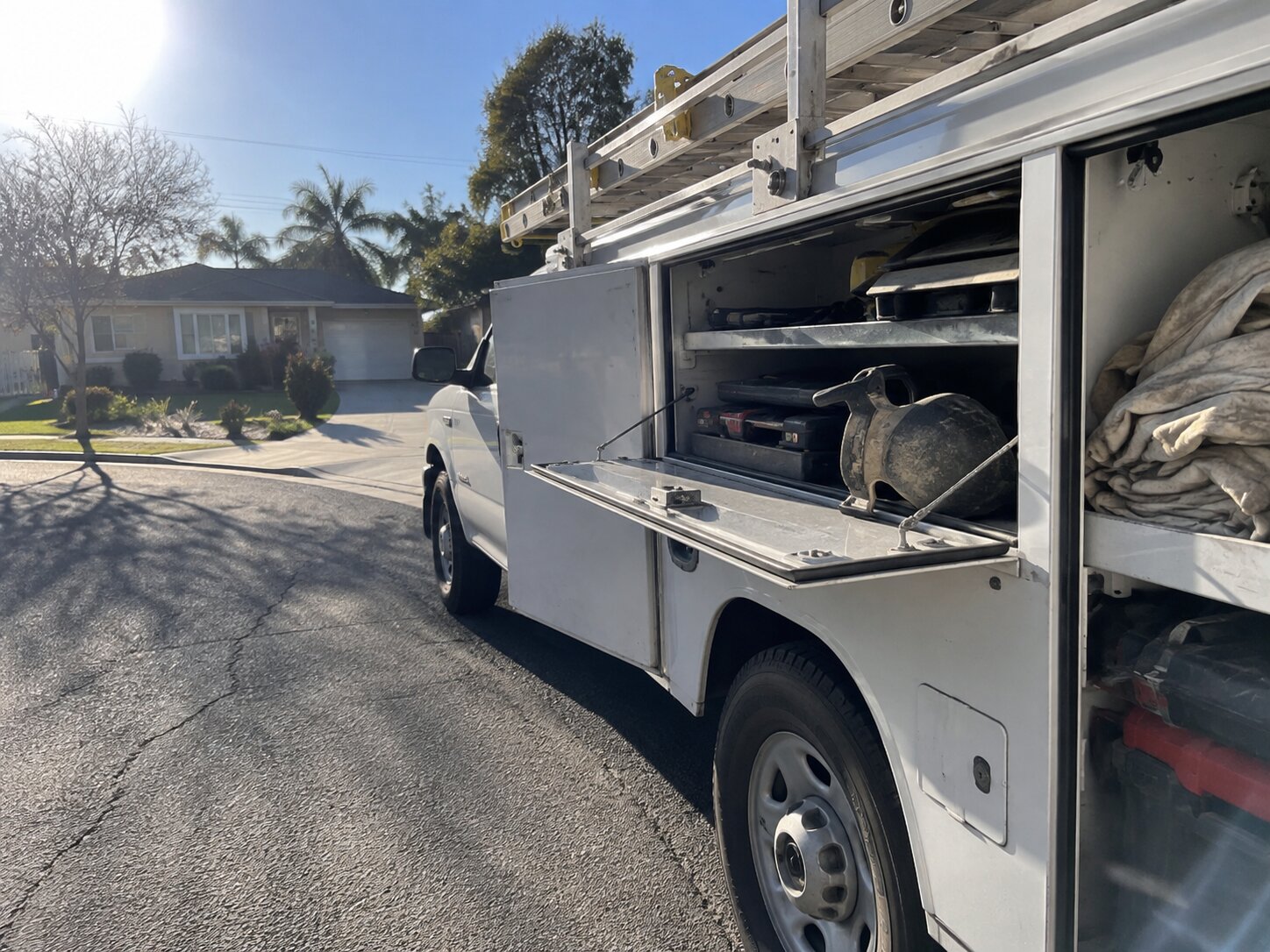
Service trucks carry inventory of common repair parts for Salt Lake County’s most common equipment — capacitors, contactors, flame sensors, igniters, common motor sizes, refrigerant for top-offs, and standard fittings and tools. Most routine service calls and many emergency repairs complete on the first visit with parts on the truck.
Knowledge of Local Equipment Patterns
Years of work across the valley have given us familiarity with equipment patterns specific to different neighborhoods — common installations in West Valley City vs. Salt Lake City vs. West Jordan, age-related issues common to specific construction eras, microclimate-specific concerns (Magna lake effect, foothill elevation, Avenues historic homes), and equipment availability through local distributors.
Local Code and Permitting Knowledge
Different jurisdictions within Salt Lake County have slightly different code adoption schedules and permit requirements. We work with the building departments in West Valley City, Salt Lake City, Salt Lake County (for unincorporated areas like Kearns and Magna), Taylorsville, West Jordan, and other valley jurisdictions on permit filing and inspection coordination.
Salt Lake-Specific Maintenance Calendar
Annual service scheduling reflects Salt Lake’s seasonal patterns:
- March–May — Spring AC tune-ups, ideally before cottonwood season
- June–August — Cooling-season emergency response priority, off-season inspection availability
- September–October — Fall furnace tune-ups before sub-freezing weather
- November–February — Heating-season emergency response priority, indoor air quality work during inversion season, off-season installation projects
Service Booking and Response
Standard Service
Most service appointments scheduled within 1–5 business days. Spring AC tune-up and fall furnace tune-up appointments fill quickly as their respective seasons approach — booking in advance recommended for these. Off-season scheduling (inspections, installation consultations, IAQ assessments) typically available within 1–3 business days year-round.
Emergency Response
Same-day response under 2 hours for emergency calls placed before noon during peak season (heating emergencies during sub-freezing weather, cooling emergencies during 95°F+ heat). After-hours emergency response available year-round through our on-call technician. Maintenance plan customers receive priority emergency scheduling ahead of non-plan customers.
Multi-Property and Commercial
Commercial service contracts and multi-property contracts coordinate scheduling across portfolios with consolidated reporting. Property management customers receive single-point-of-contact service for portfolio management.
Frequently Asked Questions
- What’s the Aegis service area?
- All Salt Lake County. Primary service area includes West Valley City, Kearns, Magna, Taylorsville, West Jordan, and Salt Lake City. We also serve surrounding communities including South Salt Lake, Murray, Holladay, Cottonwood Heights, Midvale, Sandy, South Jordan, Riverton, Herriman, Bluffdale, and Draper. Outlying areas may have longer response times.
- How fast can you respond to my emergency?
- Same-day response under 2 hours typical for emergency calls placed before noon during peak season. After-hours emergency response available year-round. Response times in primary service area communities (West Valley City, Kearns, Magna, Taylorsville, West Jordan, Salt Lake City) are typically faster than outlying areas due to proximity to our shop.
- Do you charge extra for service in outlying areas?
- Generally no, but emergency response times may be longer for outlying areas. Routine maintenance and installation pricing is consistent across the service area. For very distant areas of Salt Lake County, modest travel surcharges may apply on emergency calls — we discuss this at scheduling so there are no surprises.
- Where is your shop located?
- Our shop is at 4454 Manhattan Ct, West Valley City, UT 84120. Service trucks dispatch from this location to jobs across Salt Lake County throughout the workday.
- What hours are you available for service?
- Office hours are Monday–Saturday 9 AM–5 PM. Emergency response is available 24/7 through our on-call technician. After-hours emergency calls carry a modest premium reflecting technician overtime cost.
- Do you serve communities outside Salt Lake County?
- Our primary service area is Salt Lake County. We occasionally provide service to adjacent areas in Davis County or Utah County for existing customers with multiple property locations, but new customer service outside Salt Lake County typically isn’t available.
- Why does location matter for HVAC service?
- Local knowledge matters more than most homeowners realize. Salt Lake’s elevation requires altitude-corrected combustion. Inversion conditions affect IAQ recommendations. Cottonwood season affects spring AC service timing. Lake-effect microclimates affect humidity equipment recommendations. Older housing stock in different neighborhoods has different equipment patterns. Local contractors who understand these conditions provide better service than out-of-area contractors who treat Salt Lake like a generic market.
Schedule Service Anywhere in Our Service Area
Whether you need service in West Valley City near our shop or in an outlying Salt Lake County community, call (385) 250-0687 for scheduling. Office hours Monday–Saturday 9 AM–5 PM; emergency response 24/7.
- Phone: (385) 250-0687
- Email: info@aegisheatingandair.xyz
- Address: 4454 Manhattan Ct, West Valley City, UT 84120