
Indoor Air Quality Services in Salt Lake County
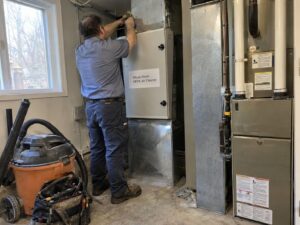
Indoor air quality matters more in this valley than in most parts of the country. The Utah Division of Air Quality documents persistent winter inversions in the Salt Lake Basin that regularly produce PM2.5 readings well above EPA healthy thresholds — sometimes for weeks at a time. Summer ozone spikes add a different pollution profile during cooling season. Lake-effect dust from the Great Salt Lake shoreline contributes another category of particulates. Add the household sources common to any modern home — VOCs from building materials, cleaning products, and furniture; biological growth in damp areas; combustion byproducts from gas appliances — and indoor air in a typical Salt Lake home can be measurably worse than outdoor air for substantial portions of the year.
The geographic reality matters: when outdoor air quality is bad, the natural impulse is to close windows and keep it outside. That’s correct, but it also means whatever pollutants are inside your home stay inside. Filtration, ventilation, humidity management, and source control aren’t optional upgrades in the Salt Lake Valley — they’re how you make a tight, energy-efficient home actually healthy to live in. Below are the indoor air quality services we provide, what each one addresses, and how to think about which combinations make sense for your home and your family’s specific needs.
Indoor Air Quality Services We Offer
Duct Cleaning
Whole-system duct cleaning using high-volume negative-pressure equipment. Particularly valuable after construction or renovation work that introduced drywall dust into the system, after rodent or insect activity in ducts, for homes with respiratory sensitivities, or for systems that haven’t been cleaned in 10+ years. We don’t recommend duct cleaning as a routine annual service — it’s not necessary in most cases — but for specific situations, it produces measurable improvement.
Whole-Home Humidifiers
Bypass and fan-powered humidifier installation. Salt Lake winters produce extremely dry indoor air — indoor relative humidity often drops below 15% during heating season without humidification, which causes static electricity, dry skin and sinuses, cracked wood furniture and floors, and degraded sleep quality. Whole-home humidifiers integrated with the HVAC system maintain RH in the comfortable 30–45% range during heating season.
Whole-Home Dehumidifiers
Integrated dehumidification for finished basements, lower levels, and lake-effect humid zones on the west side of the valley. While Salt Lake’s overall climate is dry, specific areas (basements with concrete walls, homes near the Great Salt Lake, homes with poor drainage) can develop chronic humidity problems leading to mold, musty smells, and discomfort. Whole-home dehumidifiers solve these problems more effectively than portable units.
Air Purifier Installation
Whole-home air cleaners and HEPA bypass systems. MERV-13 through MERV-16 media filtration cabinets that integrate with your existing HVAC system, capturing particulates down to PM2.5 and below. Particularly valuable during inversion season when outdoor air quality is poor and indoor recirculated air picks up particulates that infiltrate through the building envelope.
UV Light Air Treatment
UV-C lamps installed inside the air handler to disrupt biological growth on evaporator coils and in condensate pans. Effective against mold, bacteria, and viruses that accumulate on damp HVAC surfaces. Most useful when paired with media filtration (which catches particulates) — UV handles biological contamination that filters can’t trap.
Air Filter Replacement
Standard pleated filters through high-MERV media cabinets. The right filter for your specific equipment depends on system static pressure, filter slot dimensions, and the air quality goals you’re trying to meet. We can install media filter cabinets that hold 4–5″ deep pleated filters offering much better filtration and longer service life than standard 1″ filters.
Carbon Monoxide Testing
Combustion analysis on gas appliances, ambient CO testing in the home, flue testing on venting systems, and CO detector evaluation. CO is the most serious indoor air quality risk in homes with combustion appliances — colorless, odorless, and capable of causing illness or death depending on exposure level. Periodic professional CO testing catches problems that home CO detectors might miss.
The Salt Lake Valley Indoor Air Quality Context
Winter Inversions
The valley’s geography — a bowl ringed by the Wasatch and Oquirrh mountain ranges — creates conditions where cold air settles in the basin and warmer air above acts as a lid. The temperature inversion prevents normal vertical air mixing that disperses pollutants. During multi-day inversions, PM2.5 and other pollutants accumulate to levels that the Utah Division of Air Quality regularly designates as unhealthy for sensitive groups, unhealthy for all, or in severe cases, very unhealthy.
Indoor implications: even with windows closed, particulates infiltrate through the building envelope (cracks, gaps, ventilation systems) and accumulate inside the home. Without proper filtration, indoor PM2.5 levels during inversions can approach outdoor levels. With MERV-13 or higher filtration, indoor levels can be reduced 60–80% compared to outdoor concentrations. The filtration upgrade is meaningful for households with respiratory conditions, cardiovascular disease, elderly members, infants, or pregnant women.
Summer Ozone
Summer brings a different air quality issue — ground-level ozone spikes when sunlight reacts with nitrogen oxides and volatile organic compounds in the atmosphere. Ozone is harder to filter than particulates (standard media filters don’t remove ozone) but stays primarily outdoors during hot weather when cooling systems are running and homes are tightly closed. The summer ozone issue is more about reducing outdoor activity during high-ozone days than indoor filtration upgrades.
Dry Winter Air
Salt Lake winters are extremely dry. Cold outdoor air holds very little moisture, and when it’s heated indoors without humidification, indoor relative humidity often drops to 10–20% — well below the 30–50% comfort range. Dry air problems compound: sinuses dry out and irritate, skin cracks, wood furniture and flooring contract and split, static electricity becomes constant, sleep quality degrades, and respiratory viruses spread more easily because their airborne survival increases at low humidity. Whole-home humidification solves these problems efficiently.
Lake-Effect Humidity (West Side)
Communities near the Great Salt Lake — Magna, parts of West Valley City, areas closer to the lake’s eastern shore — experience higher summer humidity than the rest of the valley due to lake-effect moisture transport. Basements in these areas can develop chronic humidity problems even in our generally dry climate. Whole-home dehumidification addresses lake-effect humidity issues more effectively than portable dehumidifiers.
Older Housing Stock and Atmospheric-Vent Combustion
Pre-1990s Salt Lake homes (common in Salt Lake City, older West Valley neighborhoods, parts of Kearns and Magna) often have 80% AFUE atmospheric-vent furnaces, gas water heaters venting through chimneys, and other combustion appliances that require adequate combustion air supply. Tightly weather-sealed older homes can starve atmospheric-vent equipment of combustion air, leading to incomplete combustion, elevated CO production, and back-drafting of flue gases into living spaces. CO testing and combustion analysis are particularly important in these homes.
How to Think About Indoor Air Quality Investments
Not every home needs every IAQ service. The right combination depends on your specific situation. General guidance:
Almost Every Home Benefits From
- MERV-13 filtration (assuming the HVAC system can handle the static pressure — we verify before installing higher-MERV filters)
- Whole-home humidifier during heating season — solves the dry-air problems specific to this climate
- CO detectors on every level if there are any combustion appliances in the home
Some Homes Specifically Need
- Duct cleaning — after construction/renovation, after rodent activity, in homes that haven’t had it in 10+ years, or in homes with respiratory sensitivities
- UV light treatment — particularly in humid climates or where biological growth on evaporator coils has been a recurring problem
- HEPA bypass filtration — for households with severe allergies, asthma, or compromised immune systems
- Dehumidification — for basements with chronic humidity issues, west-side lake-effect zones, homes with mold history
- Source control — addressing specific contamination sources (radon, asbestos, lead paint, mold remediation) rather than trying to filter the symptoms
Mostly Snake Oil
- Ionizers and ozone generators sold as “air purifiers” — ozone is itself a respiratory irritant and ionizers can produce ozone as a byproduct. Most don’t help; some make air quality worse.
- Bipolar ionization marketed for COVID protection — efficacy claims have largely failed independent testing.
- “Duct cleaning every year” as a routine service — duct cleaning is valuable in specific situations but unnecessary as annual maintenance for most homes.
- “Air sterilization” claims based on questionable technology — when manufacturers won’t share testing data with third parties, the technology usually doesn’t work as advertised.
We sell what works. We don’t recommend services that won’t produce measurable benefit for your specific situation.
Filter Selection Guidance
Filters are rated on a MERV scale (Minimum Efficiency Reporting Value) from 1 (least effective) to 20 (HEPA). Higher MERV ratings capture smaller particles but also create more airflow resistance, which can reduce HVAC system performance if the system isn’t designed for high-MERV filtration.
- MERV 1–4: Captures lint and large dust particles only. Sold cheap at hardware stores. Not adequate for any indoor air quality goal beyond protecting the HVAC equipment itself.
- MERV 5–8: Captures larger dust, pollen, mold spores. Good baseline for HVAC equipment protection plus modest IAQ benefit.
- MERV 9–12: Captures finer particles including some bacteria-sized particulates. Good general-purpose IAQ filtration.
- MERV 13–16: Captures fine particulates including PM2.5, smoke particles, bacteria. This is the range that produces meaningful indoor air quality improvement during inversion season. Most modern HVAC systems can handle MERV 13 in proper-depth media cabinets without performance penalty.
- MERV 17–20 (HEPA): Captures 99.97% of particles at 0.3 microns. Typically requires HEPA bypass installations (HEPA filter installed parallel to the main air handler) because direct HEPA filtration creates too much pressure drop for standard residential equipment.
The right filter for your home depends on your equipment, your filter slot depth, and your IAQ goals. We can install media filter cabinets that accommodate 4–5″ deep MERV 13–16 filters where standard 1″ filters can’t deliver adequate performance.
Carbon Monoxide Safety
Any home with combustion appliances — gas furnace, gas boiler, gas water heater, gas range, gas dryer, gas fireplace — should have functioning carbon monoxide detectors on every level. CO is colorless, odorless, and can cause illness or death depending on exposure level. CO detectors are inexpensive insurance against a genuinely dangerous failure mode.
Periodic professional CO testing during furnace tune-ups, boiler service, and annual HVAC inspections catches CO problems that home detectors might miss. CO detectors are designed to alarm at acute exposure levels (typically 70 ppm for extended periods or higher for shorter durations). Low-level CO problems from minor combustion issues may produce chronic symptoms (headaches, fatigue, mild nausea) without triggering detector alarms — but combustion analysis with calibrated professional equipment detects these problems and allows correction before they escalate.
Frequently Asked Questions
- Do I really need indoor air quality equipment in Salt Lake?
- Most homes benefit measurably from at least basic upgrades — MERV-13 filtration during inversion season, whole-home humidification during heating season, and functional CO detection in homes with combustion appliances. Whether you need more depends on specific health concerns (allergies, asthma, respiratory conditions), specific home conditions (basement humidity, mold history, recent construction), and your personal priorities. We can assess your home and recommend specifically what would help, without selling services that wouldn’t produce measurable benefit.
- What’s the most impactful IAQ upgrade for an average Salt Lake home?
- For most homes, upgrading from a 1″ standard filter to a 4–5″ media filter cabinet with MERV-13 filtration delivers the most measurable improvement at modest cost. It significantly reduces PM2.5 infiltration during inversion season, captures allergens and combustion particulates, and requires filter replacement every 6–12 months instead of monthly. Installation typically runs $450–$900 for the media cabinet and initial filter; ongoing filter cost is $40–$80 per replacement.
- Will an air purifier help with inversions?
- Yes, if it’s a real media or HEPA filtration system properly integrated with your HVAC system. Whole-home MERV-13 filtration can reduce indoor PM2.5 levels 60–80% compared to outdoor levels during inversion events. Portable HEPA filters in individual rooms (typically bedrooms) can produce even higher reduction in the specific rooms where they operate. What doesn’t work: ionizers, ozone generators, or “air sterilization” devices that don’t actually filter particulates.
- Do I need a humidifier in Salt Lake?
- For most homes, yes — winter indoor humidity often drops to 10–20%, well below the 30–45% comfort range. Symptoms of low humidity include dry skin and sinuses, static electricity, cracked wood furniture, degraded sleep quality, and increased susceptibility to respiratory viruses. Whole-home humidifiers integrated with the HVAC system add humidity efficiently across the entire home, unlike portable units that only humidify the room they’re in.
- How often should ducts be cleaned?
- Less often than most marketing suggests. Duct cleaning is valuable in specific situations — after construction or renovation work that introduced drywall dust, after rodent or insect activity, for homes with severe respiratory sensitivities, or for systems that haven’t been cleaned in 10+ years. As routine annual maintenance, it’s not necessary or beneficial for most homes. We recommend duct cleaning when it would produce measurable benefit; we don’t push it as a recurring service.
- Do UV lights actually do anything?
- Yes, when installed correctly and targeting the right surfaces. UV-C lamps installed inside the air handler to illuminate the evaporator coil and condensate pan disrupt biological growth on those surfaces — mold, bacteria, and viruses that accumulate on damp HVAC components. This is meaningful for indoor air quality and equipment longevity. UV-C in-duct treatment of moving air streams is less effective because the dwell time is too short to fully inactivate pathogens passing through the lamp’s range. Most marketing claims about “killing viruses in your air” overstate the actual benefit.
- What’s the difference between MERV ratings?
- MERV (Minimum Efficiency Reporting Value) rates filters from 1 (least effective) to 20 (HEPA). Higher MERV captures smaller particles but creates more airflow resistance. MERV 8 is typical for standard 1″ filters and captures large dust and pollen. MERV 13 (the range that produces meaningful PM2.5 reduction during inversions) typically requires 4–5″ media cabinets to handle the airflow resistance without restricting HVAC performance. MERV 16+ requires HEPA bypass installations for most residential equipment.
Schedule IAQ Assessment
If you’re not sure what indoor air quality services would help your specific home, we offer assessments that include filter slot measurement, static pressure verification, combustion analysis on gas appliances, ambient CO testing, and discussion of your family’s specific health concerns and priorities. The assessment runs $99–$179 and is applied toward any IAQ equipment installation we perform.
- Phone: (385) 250-0687
- Email: info@aegisheatingandair.xyz
- Address: 4454 Manhattan Ct, West Valley City, UT 84120