
HVAC Services in Salt Lake City, Utah
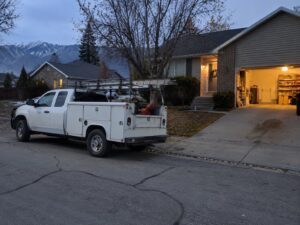
Salt Lake City is the cultural and commercial heart of the valley with the most diverse HVAC landscape we encounter anywhere in our service area. Historic neighborhoods (the Avenues, Sugar House, Liberty Wells, the Marmalade District, Capitol Hill, Yalecrest) include homes from the late 1800s through mid-1900s with original atmospheric-vent equipment, masonry chimneys, hot-water radiator boilers, and the distinctive HVAC characteristics of pre-modern construction. Mid-century suburban neighborhoods (East Bench, Sugar House outskirts, Liberty Park surroundings, Westside) include the full range of mid-century residential equipment. Modern downtown commercial development uses sophisticated commercial HVAC including BAS-integrated systems and premium commercial equipment tiers. New construction throughout the city includes current high-efficiency installations.
The geographic spread complicates things further. Salt Lake City extends from foothill neighborhoods at 5,000+ feet elevation down to valley floor neighborhoods at 4,300 feet, producing microclimates affecting HVAC sizing and equipment selection. East Bench neighborhoods experience modestly different conditions than westside neighborhoods. Avenues homes face foothill elevation considerations that valley floor homes don’t. Working in Salt Lake City means handling more equipment generations, more construction eras, and more microclimate variations than any other community in our service area.
Below is what we know about HVAC in Salt Lake City specifically — neighborhood patterns, historic home considerations, modern construction characteristics, commercial work, and how to schedule service.
Salt Lake City HVAC Context
Geographic and Elevation Variations
Salt Lake City spans significant elevation differences affecting HVAC requirements:
- Valley floor neighborhoods — Westside, parts of Liberty Wells, Sugar House valley areas: approximately 4,260–4,350 feet elevation
- Bench neighborhoods — Avenues lower areas, East Bench, Yalecrest, lower Sugar House: approximately 4,400–4,800 feet elevation
- Upper bench and foothill — Upper Avenues, Federal Heights, East Bench upper sections: 4,800–5,200+ feet elevation
- Foothill estates — eastern foothill homes approaching the Wasatch: 5,000–5,500+ feet elevation
Higher elevation neighborhoods experience modestly cooler temperatures during summer, slightly more severe winter conditions, and different equipment sizing considerations than valley floor locations. Manual J load calculations account for these elevation differences during equipment selection.
Climate Conditions
- Winter design temperature: 14°F at the valley floor, cooler at foothill elevations
- Summer design temperature: 96°F at the valley floor, slightly cooler at bench elevations
- Winter inversions: Salt Lake City sits in the heart of the valley inversion zone, with PM2.5 accumulation affecting indoor air quality during multi-day inversions
- Foothill snow accumulation: Higher elevation neighborhoods can receive significantly more snow than valley floor during winter storms, affecting outdoor equipment access and operations
- Cottonwood season: Late May through June produces heavy seed loading across the city, particularly along older streets with mature cottonwood populations
- Dry winter air: Standard valley conditions producing 15–25% indoor humidity without humidification
Housing Stock and Neighborhood Patterns
Salt Lake City housing stock spans 150+ years of construction with distinctive patterns by neighborhood:
- The Avenues (north of South Temple, foothill area) — late 1800s through early 1900s Victorian and craftsman homes, hot-water boiler systems common, original cast-iron radiators, atmospheric-vent gas appliances, masonry chimneys requiring careful evaluation, historic preservation considerations affecting HVAC modifications
- Capitol Hill and Marmalade District — similar pre-1920 construction with hot-water heating systems, retrofit AC challenges, historic preservation considerations
- Sugar House — diverse housing from 1900s bungalows through mid-century homes through newer infill construction, mix of original boiler systems, forced-air retrofits, and modern equipment
- Liberty Wells and Central City — pre-1940 housing with original heating systems, gradually retrofit over decades to forced-air or split-system equipment
- 9th & 9th, Trolley Square area — historic and mixed-era residential adjacent to commercial development
- East Bench (between Foothill Drive and the mountains) — mid-century through modern homes with elevation-related HVAC considerations
- Yalecrest — 1920s–1940s established neighborhood with mix of original and retrofit equipment
- Westside (Glendale, Poplar Grove, Rose Park) — mid-century through modern housing, mix of equipment generations
- Downtown and central business district — primarily commercial with mixed-use residential, sophisticated commercial HVAC
- New construction throughout the city — modern high-efficiency equipment with integrated ductwork
HVAC Services We Provide in Salt Lake City
Residential Services
Full residential HVAC service across Salt Lake City’s diverse housing stock:
- Heating services — extensive work given the city’s older housing stock with boiler systems, atmospheric-vent furnaces, and the full range of mid-century through modern heating equipment. Furnace installation, repair, tune-ups, heat pump installation, heat exchanger inspection, boiler service and installation, gas line work.
- Cooling services — including retrofit AC additions to homes that originally had only heating, evaporator coil installation in existing furnaces, ductless mini-split installations in historic homes without ductwork, standard AC repair and replacement
- Indoor air quality — particularly important in Salt Lake City given inversion-season conditions, older housing stock with atmospheric-vent equipment, and historic home considerations. CO testing, MERV-13 filtration upgrades, whole-home humidification, duct cleaning when warranted
- Maintenance — tune-ups, inspections, emergency repair, maintenance plans
- Installation — system replacement, ductless mini-splits (particularly relevant in historic homes), zoned HVAC, smart thermostats, air handler services
Commercial Services
Salt Lake City has the most diverse commercial HVAC landscape in our service area:
- Commercial HVAC across restaurants, retail, professional offices, medical buildings, and downtown commercial development
- Commercial maintenance programs with quarterly, biannual, or annual schedules
- Rooftop unit service for the extensive RTU populations across commercial corridors
- Commercial service contracts for property management companies with downtown and central-city portfolios
Historic Home HVAC Considerations
Salt Lake City’s historic neighborhoods present specific HVAC challenges and considerations:
Original Boiler Systems
Many pre-1940 homes in the Avenues, Capitol Hill, Marmalade District, and other historic neighborhoods still operate original boiler systems with hot-water or steam radiator distribution. Common service work:
- Boiler service and component replacement (circulator pumps, zone valves, aquastats, expansion tanks)
- Boiler replacement when existing equipment reaches end of service life
- Hydronic system flushing and treatment
- Radiator service and replacement
- System pressure verification and bleeding
- Conversion from steam to hot-water (occasionally requested but typically major project)
See our boiler installation page and boiler repair page.
Adding AC to Historic Homes
Many historic Salt Lake City homes have only heating (often boiler systems) and need AC retrofits. Approaches:
- Ductless mini-split systems — typically the best solution for historic homes without existing ductwork. Multi-zone systems serve multiple rooms from a single outdoor unit with minimal architectural impact. See our ductless mini-splits page.
- High-velocity small-duct systems — specialized AC systems using small-diameter flexible ducts that fit through existing wall cavities. More expensive and specialized but possible in homes that can’t accommodate standard ductwork.
- Window or portable AC units — short-term solutions but not typically what we install
Historic Preservation Considerations
Historic district designations and preservation guidelines affect HVAC modifications in some Salt Lake City neighborhoods. Considerations:
- Exterior equipment placement may be regulated
- Roof penetrations and venting modifications subject to preservation review in some districts
- Mechanical room modifications affecting historic interior elements need careful planning
- Approved equipment styles and finishes may be specified for certain historic properties
We work within preservation requirements and have experience coordinating HVAC projects in historic neighborhoods.
Atmospheric-Vent Equipment in Older Homes
Many mid-century Salt Lake City homes still operate atmospheric-vent furnaces, gas water heaters, and other combustion appliances. Common service:
- Heat exchanger inspection on aging furnaces
- Combustion analysis with CO measurement
- Chimney venting evaluation
- Combustion air supply verification in tightly weather-sealed older homes
- Atmospheric-vent equipment replacement with sealed-combustion alternatives when ready
Original Ductwork in Mid-Century Homes
Mid-century homes often have original ductwork sized for that era’s equipment and air handling capacity. When customers replace original furnaces with higher-capacity modern equipment, original ducts sometimes need modifications to handle modern airflow without static pressure problems. We assess existing ductwork during equipment replacement quotes.
Modern Construction in Salt Lake City
New construction throughout Salt Lake City — particularly in established neighborhoods through infill development, plus newer subdivisions and condo/townhome construction — uses current high-efficiency equipment:
- Modulating condensing furnaces (94–98% AFUE)
- Two-stage and variable-speed AC equipment
- Heat pump installations in some new construction
- Integrated smart thermostats with proper equipment staging
- Media filter cabinets often included in original construction
- Whole-home humidification often included in original construction
Service on modern Salt Lake City equipment is similar to service patterns elsewhere in the valley.
Commercial Salt Lake City
Downtown Commercial Development
Downtown Salt Lake City includes the most sophisticated commercial HVAC in our service area — high-rise buildings with central plant systems, BAS-integrated commercial systems, commercial-grade VRF/VRV multi-zone systems, and specialty commercial equipment. Our commercial work in this segment typically focuses on light commercial through mid-size commercial buildings rather than high-rise central plant work.
Restaurant and Hospitality
Salt Lake City has substantial restaurant and hospitality industry HVAC including kitchen exhaust integration, makeup air requirements, refrigeration coordination, and Salt Lake County health code compliance. Restaurant HVAC is a significant portion of our commercial work.
Retail and Mixed-Use
Retail centers and mixed-use commercial development throughout Salt Lake City include RTU populations needing maintenance and replacement service. Common corridors:
- State Street commercial corridor
- Sugar House commercial development
- Foothill Drive commercial
- 9th and 9th, 15th and 15th commercial nodes
- Trolley Square area
- Various neighborhood commercial nodes throughout the city
Medical and Professional Offices
Salt Lake City has substantial medical facility, dental, legal, and professional office HVAC, with specific requirements for temperature control, humidity management, and infection control affecting service approach.
Aegis Service Response in Salt Lake City
Response Times
Salt Lake City covers significant geographic area, producing varied response times depending on location:
- Westside and central Salt Lake City — closer to our West Valley City shop, typical response 1.5–3 hours during business hours
- Avenues, East Bench, Sugar House — moderate distance, typical response 2–3 hours
- Upper Avenues, Federal Heights, foothill estates — longer travel distance, typical response 2–4 hours
- After-hours emergency calls — typical response 3–5 hours depending on location
- Standard service appointments — typically scheduled within 1–5 business days
Salt Lake City-Specific Service Focus
Our Salt Lake City service work covers a particularly wide range:
- Boiler service and installation for historic neighborhoods with hot-water radiator heating
- Atmospheric-vent equipment service in mid-century housing stock
- AC retrofits for historic homes without existing cooling, frequently using ductless mini-splits
- Modern equipment service across newer construction and infill development
- Commercial HVAC across diverse commercial property base
- Restaurant HVAC coordination with kitchen exhaust and food safety considerations
- IAQ work with particular emphasis on inversion-season filtration upgrades
- Historic preservation coordination on equipment installations in regulated districts
Frequently Asked Questions
- Where do you provide service in Salt Lake City?
- All neighborhoods across Salt Lake City. Response times vary by location — westside and central neighborhoods (closer to our West Valley City shop) typically faster than upper Avenues, Federal Heights, and foothill estates.
- How fast can you respond to a Salt Lake City emergency?
- Typical response 1.5–4 hours during business hours depending on neighborhood location. After-hours emergency response typically 3–5 hours. Maintenance plan customers receive priority scheduling.
- Do you handle historic home HVAC?
- Yes, extensively. Salt Lake City’s historic neighborhoods — the Avenues, Capitol Hill, Marmalade District, Sugar House older sections, Yalecrest — have specific HVAC characteristics including boiler heating systems, atmospheric-vent equipment, masonry chimneys, and historic preservation considerations. We have experience working in these neighborhoods with appropriate respect for architectural elements.
- Can you add AC to my historic home without ductwork?
- Yes. Ductless mini-split systems are typically the best solution for historic homes without existing ductwork — minimal architectural impact, high efficiency, independent zone control. Multi-zone systems serve multiple rooms from a single outdoor unit. We have substantial experience with mini-split installations in Salt Lake City historic neighborhoods. See our ductless mini-splits page.
- Do you work on boiler systems?
- Yes. Substantial boiler work across Salt Lake City’s historic and pre-modern housing stock — service, repair, component replacement, and full boiler replacement. See our boiler repair page and boiler installation page.
- Do you handle commercial HVAC in downtown Salt Lake City?
- Yes, for light through mid-size commercial applications. Our commercial work focuses on restaurants, retail, professional offices, medical buildings, and similar light-commercial properties rather than large central-plant high-rise commercial. Substantial commercial HVAC across Salt Lake City’s diverse commercial corridors.
- How does elevation affect HVAC equipment?
- At 4,300 feet (valley floor) to 5,200+ feet (upper foothill), Salt Lake City elevation requires altitude correction on all gas combustion equipment per manufacturer specifications. Higher elevation neighborhoods (Federal Heights, upper Avenues, foothill estates) have slightly more severe winter conditions and modestly different equipment sizing considerations. Manual J load calculations account for elevation during equipment selection.
Schedule Service in Salt Lake City
Call our shop at (385) 250-0687 for service in Salt Lake City. Office hours Monday–Saturday 9 AM–5 PM; emergency response 24/7.
- Phone: (385) 250-0687
- Email: info@aegisheatingandair.xyz
- Address: 4454 Manhattan Ct, West Valley City, UT 84120