
Boiler Installation in Salt Lake County
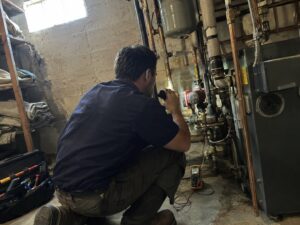
A substantial fraction of pre-1970 Salt Lake homes — particularly in the Avenues, Sugar House, Liberty Wells, Marmalade District, and older West Valley neighborhoods — still rely on hydronic heating: a gas boiler in the basement circulating hot water through cast iron radiators or baseboard convectors throughout the home. These systems are quiet, comfortable, durable, and capable of producing exceptionally even heating compared to forced-air systems. When properly maintained, original cast iron boilers from the 1950s and 1960s sometimes outlast multiple generations of the families who own them. When neglected or improperly serviced, they can develop problems that range from comfort issues to significant safety hazards.
Most HVAC contractors in Salt Lake County avoid boiler work entirely. Hydronic heating requires a different skill set than forced-air HVAC — gas piping, water piping, pump and pressure systems, expansion management, and zone controls all matter in ways they don’t on furnace work. The installations are more involved, the diagnostics are more nuanced, and the customer base is smaller. We do this work anyway. Patrick learned boilers early in his career, we maintain the equipment and parts inventory required, and Travis Hollings (our lead installer) holds a Utah journeyman plumber endorsement that’s required for the gas and water piping work involved in boiler installation.
Below is how we approach boiler installation, what factors determine the right boiler for your home, what to expect during the install process, and what your investment buys in long-term comfort and reliability.
When to Replace Your Boiler
Boilers don’t fail on a predictable timeline. Cast iron boilers from the 1950s and 1960s sometimes operate for 60+ years; modern stainless steel and aluminum condensing boilers typically have shorter design lives (15–25 years) but are more efficient. Common triggers for boiler replacement:
- Visible water leakage from the boiler section — cracked cast iron sections, corroded steel tubing, or failed gaskets. Section replacement is sometimes feasible on older boilers; modern boilers typically require full replacement when the heat exchanger fails.
- Cracked heat exchanger on modern condensing boilers — same safety implications as furnace heat exchanger cracks, with combustion gas migration into the supply water or surrounding space.
- Combustion problems that can’t be resolved through normal service — typically indicates burner or heat exchanger issues that warrant replacement on older equipment.
- Operating efficiency below useful levels — older atmospheric-draft cast iron boilers operating at 60–70% efficiency vs. modern condensing boilers operating at 95%+ efficiency. The efficiency gap matters when gas costs are high.
- Inadequate capacity for the home’s current heat load — typically after additions or renovations changed the heat requirement.
- Failed circulator pumps, expansion tanks, controls on equipment that’s reached the end of its useful life and where major component replacement isn’t economical.
Choosing the Right Boiler
Several factors determine the right boiler for your home:
Heat Loss Calculation, Not BTU Rule of Thumb
Sizing a boiler from existing equipment specifications, square footage, or “the old one was 100,000 BTU so the new one should be too” produces poor results. Many existing boilers in older Salt Lake homes are dramatically oversized — sometimes by 100% or more — because they were sized for a home with single-pane windows, no insulation, and air infiltration rates twice what they are after weatherization upgrades.
We perform proper heat loss calculations that account for current envelope conditions (insulation, windows, air sealing), Salt Lake’s elevation-corrected design temperatures, and actual radiator or baseboard capacity in the home. Right-sizing reduces fuel consumption, improves comfort, and extends equipment life.
Boiler Type
Three main boiler categories for residential use:
- Cast iron boilers — traditional, durable, typically atmospheric-vent or induced-draft, efficiency in the 82–86% range. Long service life (25+ years typical). Best fit for: customers prioritizing longevity, homes with existing cast iron systems where matching equipment style makes sense, and applications where the older venting infrastructure can be retained.
- Stainless steel condensing boilers — modern high-efficiency equipment, 92–96% AFUE. Vent through PVC pipe rather than masonry chimney. Shorter service life than cast iron (15–25 years) but significantly more efficient. Best fit for: customers prioritizing efficiency, homes where existing venting needs replacement anyway, applications with appropriate condensate handling.
- Aluminum condensing boilers — similar efficiency profile to stainless steel, lower cost, but generally shorter useful life and more sensitive to water quality. Best fit for: budget-conscious installations where 15-year service life is acceptable.
Single-Stage vs. Modulating
Single-stage boilers operate at one fixed output — on or off. Modulating boilers continuously vary their output across a 20–100% range, matching the home’s instantaneous heat demand. Modulating boilers produce more consistent comfort, longer run times that improve combustion efficiency, and reduced cycling stress on components. They typically cost 20–40% more than single-stage equipment but recoup the difference through efficiency gains and longer service life.
Vent Type
- Atmospheric-vent boilers use the home’s existing chimney or B-vent. Lowest first cost but require proper chimney condition and adequate combustion air supply.
- Induced-draft boilers use a small fan to drive flue gases through B-vent or sometimes single-wall vent. Better venting performance than atmospheric units; still typically uses existing chimney infrastructure.
- Condensing boilers (sealed combustion) use PVC venting routed directly to outside through an exterior wall or roof. Eliminate dependence on chimney condition. Most flexible installation location. Required for high-efficiency operation.
Distribution System Compatibility
The boiler must work with your home’s existing radiators, baseboards, or in-floor radiant tubing. Modern condensing boilers operate most efficiently at supply water temperatures of 130–150°F, which works well with baseboard systems and radiant floor heating but may be too low for older cast iron radiator systems sized for 180°F supply water. Hybrid approaches (mixing valves, weather-responsive controls) can optimize condensing boiler operation with high-temperature distribution systems.
The Boiler Installation Process
1. Free In-Home Estimate
Boiler installations require more on-site assessment than furnace replacements. A typical estimate visit runs 90 minutes to two hours and includes:
- Heat loss calculation for the home’s current envelope conditions
- Existing system audit — boiler capacity, radiator or baseboard inventory, distribution piping condition, expansion tank type, circulator pump condition
- Gas line capacity verification — most boiler replacements require gas line evaluation, sometimes resizing
- Water service inspection — fill valve, backflow preventer, water pressure
- Venting evaluation — existing chimney condition or PVC vent routing options for condensing equipment
- Electrical assessment — circulator pump power, control wiring, zone valve compatibility
- Discussion of equipment options across price tiers with tradeoffs spelled out
Written line-item quote within 24 hours. Quotes for boiler work tend to run longer and more detailed than furnace quotes because the scope of work is more variable.
2. Equipment Selection
Based on the heat loss calculation and the system assessment, we recommend specific boilers from manufacturers we trust for Salt Lake County applications:
- Weil-McLain — full lineup from cast iron (CGa, EG, GV90) through stainless steel condensing (Evergreen, Ultra)
- Burnham/U.S. Boiler — Independence and Series 3 cast iron, Aspen and Alpine condensing
- Lochinvar — Knight and FTX series condensing boilers, common in residential and light commercial applications
- Buderus — GB142 and SSB series stainless steel condensing boilers, premium European engineering
- Navien — combi-boilers (NCB and NFC series) that provide both space heating and domestic hot water from a single unit
3. Permit and Pre-Install Coordination
Boiler installations require mechanical permits with the local jurisdiction in most Salt Lake County cities. For installations involving gas line modifications, separate plumbing permits and inspections are sometimes required — Travis Hollings handles this work under his Utah journeyman plumber endorsement.
For older homes where existing piping requires modification or replacement (galvanized supply lines, leaking control valves, undersized return piping), we coordinate the additional scope as part of the install. Equipment ordering takes 3–10 days for most residential boilers; specialty equipment can take longer.
4. Install Day(s)
Typical residential boiler replacement runs one to two days depending on scope. Major scope items that affect timeline:
- Standard like-for-like replacement (cast iron for cast iron, atmospheric-vent retained): typically one day, 8–10 hours
- Conversion to condensing equipment (atmospheric-vent replaced with PVC venting): typically 1.5–2 days due to venting modifications
- Distribution system updates (zone valve additions, piping reconfiguration, new circulator pumps): adds time depending on scope
- Gas line modifications: typically adds half a day if substantial
- Combi-boiler installation (replacing separate boiler and water heater with combined unit): adds time for water heater integration
Install day workmanship priorities:
- Proper boiler placement — clearances to combustibles per manufacturer specification, access for future service, proper mounting (wall-mounted for most condensing units, floor-mounted for cast iron)
- Gas line sizing and connections — verified against manufacturer requirements, properly supported per Utah Mechanical Code (every 6 feet horizontal)
- Water piping — copper or PEX per local code, properly insulated where required, dielectric unions where transitioning between dissimilar metals
- Expansion tank sizing and proper pre-charge pressure for the system
- Circulator pump selection and orientation — proper sizing for the system’s flow requirements, correct directional orientation
- Zone controls — relay box, transformer, zone valves or zone pumps depending on system design
- Combustion air supply verified adequate for atmospheric-vent installations or proper sealed combustion for condensing units
- Condensate handling on condensing boilers — pitched drain, neutralizer where required by code or when condensate drains to materials sensitive to acidic condensate
- Pressure relief valve properly sized and discharged per code (to a visible location, not into the floor drain)
- Backflow preventer on the water fill line per Utah Plumbing Code
5. Commissioning and Start-Up
Boiler commissioning is more involved than furnace commissioning because there’s a water system to bring online in addition to the combustion system. Steps include:
- System fill and purge — fill the system with water, vent air from all radiators or baseboards, verify proper pressure
- Initial firing and combustion analysis — CO ppm, O2 percentage, flue gas temperature, draft pressure
- Gas pressure verification at inlet and manifold against manufacturer specification
- Water temperature differential across the boiler (supply vs. return) against manufacturer specification
- Flow verification at each zone — measuring temperature differential across zones to confirm proper flow
- Pump operation verification — proper rotation, proper amp draw, no cavitation noise
- Control sequence testing — verify boiler responds correctly to thermostat calls, zone valves operate, outdoor reset functions (if installed)
- Safety control testing — pressure relief, low-water cutoff (if installed), high-limit aquastat
- Documentation — commissioning data emailed, photos of finished install, manufacturer warranty registration filed
6. Walkthrough and 30-Day Follow-Up
Before we leave, the lead technician walks you through the new boiler — how to operate the thermostat and zone controls, where the gas shutoff is, where the water shutoff is, what pressure your system should run at, what to watch for, and what seasonal maintenance schedule we recommend. Rachel calls 30 days after the install to verify everything’s running correctly.
Boiler Installation Costs in Salt Lake County
- Standard cast iron atmospheric-vent boiler replacement: $7,500–$11,000 installed
- Mid-efficiency cast iron with induced draft: $8,500–$13,000 installed
- Modulating condensing boiler: $10,000–$15,000 installed
- Premium European condensing boiler (Buderus, Viessmann): $12,000–$18,000 installed
- Combi-boiler (heating + domestic hot water): $11,000–$17,000 installed (often economical because eliminates separate water heater)
- Add-ons that affect price — zone valve additions, circulator pump upgrades, gas line modifications, venting changes (atmospheric to PVC condensing), distribution piping replacement, indirect water heater for separate domestic hot water, outdoor reset controls
Available financing through Synchrony Bank and Service Finance Company includes 0% APR promotional plans and longer-term fixed-rate options. Dominion Energy Therm-Wise rebates apply to qualifying high-efficiency condensing boilers; federal 25C tax credit applies up to $600 on qualifying high-efficiency equipment.
What’s Included in Every Boiler Install
- Heat loss calculation for the home’s current envelope conditions
- Permit filing and inspection scheduling with the local jurisdiction
- Recovery and disposal of old equipment
- New boiler with proper size, type, and efficiency for your application
- New circulator pump(s) sized for system flow requirements
- New expansion tank with proper pre-charge pressure
- New pressure relief valve, gauge, and low-water cutoff where applicable
- New backflow preventer on water fill line
- Gas line modifications as needed for proper sizing
- New venting for condensing equipment (or chimney inspection for atmospheric-vent equipment)
- Combustion air supply verification
- Documented commissioning with combustion analysis emailed to you
- Photos of finished install for your records
- Manufacturer warranty registration filed on your behalf
- Dominion Energy Therm-Wise rebate filing on qualifying equipment
- Aegis labor warranty (in writing)
- 30-day post-install follow-up
Why Boiler Installation Costs What It Costs
Customers sometimes compare boiler quotes to furnace quotes and wonder why boilers cost more. The reasons are real:
- Equipment cost — residential boilers typically cost 30–60% more than residential furnaces of comparable efficiency tier. Materials, manufacturing complexity, and lower production volumes drive equipment price.
- Installation labor — boiler installations involve both gas piping and water piping. Two specialty trades’ worth of work concentrated in one project means more skilled labor hours per install.
- Plumbing permits and inspections — separate from mechanical permits in most Salt Lake County jurisdictions, adding cost and time.
- Specialized components — circulator pumps, expansion tanks, zone valves, backflow preventers, pressure relief valves, and various plumbing fittings add up in ways forced-air installs don’t.
- System fill and purge takes time — getting all the air out of a hydronic system after installation requires patience and proper purging technique.
A $5,500 boiler install is sometimes advertised — typically for like-for-like atmospheric-vent cast iron replacement with no gas line work, no piping modifications, no zone changes, and minimal commissioning. Sometimes that’s the right answer (a rental property, a quick replacement before sale). Most boiler installations require more scope than that and price accordingly.
Frequently Asked Questions
- How much does boiler installation cost in Salt Lake County?
- Cast iron atmospheric-vent replacement $7,500–$11,000; mid-efficiency with induced draft $8,500–$13,000; modulating condensing boiler $10,000–$15,000; premium European condensing $12,000–$18,000; combi-boiler (heating + DHW) $11,000–$17,000. Final cost depends on the specific equipment, distribution system changes, gas line modifications, and venting requirements.
- How long does boiler installation take?
- Standard like-for-like replacement typically one day, 8–10 hours. Conversion to condensing equipment with venting changes typically 1.5–2 days. Installations with distribution system updates, gas line modifications, or combi-boiler conversions can take 2–3 days. We confirm timeline in the written quote and again 48 hours before install.
- Should I replace my cast iron boiler with a condensing boiler?
- It depends on your distribution system and efficiency priorities. Modern condensing boilers operate most efficiently with lower supply water temperatures (130–150°F) that work well with baseboard and radiant floor systems but may not work efficiently with older cast iron radiator systems sized for 180°F supply water. We can configure condensing boilers to work with high-temperature distribution, but the efficiency gain may be smaller than marketing materials suggest. For some older systems, a mid-efficiency cast iron replacement is more cost-effective long-term than a condensing upgrade.
- What’s a combi-boiler and is it right for me?
- A combi-boiler provides both space heating and domestic hot water from a single unit. It heats domestic hot water on demand rather than storing it in a tank. Combi-boilers work best for homes with moderate hot water demand (small to medium households without multiple simultaneous demands) and can eliminate the need for a separate water heater. They’re less suitable for large households with high hot water demand or homes with multiple bathrooms used simultaneously. We model the math during the estimate.
- How long do boilers last?
- Cast iron boilers properly maintained can last 25–40+ years; many Salt Lake homes still have cast iron boilers from the 1950s and 1960s functioning today. Stainless steel and aluminum condensing boilers typically have 15–25-year design lives. Service life depends heavily on water quality (hard Salt Lake water can shorten condensing boiler heat exchanger life), proper maintenance, and operating conditions. Annual maintenance dramatically extends useful life regardless of boiler type.
- Do you replace boilers in homes with existing radiators?
- Yes, frequently. Most Salt Lake County boiler installations we perform are in older homes with cast iron radiator distribution systems. We size the new boiler to work with the existing radiators, configure controls appropriately for the distribution system, and verify proper flow through each zone during commissioning. Radiator-heated homes don’t need to be converted to baseboard or forced-air when replacing the boiler.
- Are there rebates available for boiler replacement?
- Yes, on qualifying high-efficiency equipment. Dominion Energy Therm-Wise rebates apply to qualifying high-efficiency condensing boilers (typically those above 90% AFUE). Federal 25C Energy Efficient Home Improvement Tax Credit provides up to $600 on qualifying high-efficiency equipment. We file rebate paperwork on your behalf as part of every install and model available incentives into the quoted price so you see real net cost.
Schedule Boiler Installation Quote
Whether you’re replacing a failing cast iron boiler, upgrading to condensing equipment, or planning a combi-boiler conversion, call (385) 250-0687 for a free in-home estimate. Quotes include heat loss calculation, equipment recommendations across price tiers, and modeled rebates and tax credits.
- Phone: (385) 250-0687
- Email: info@aegisheatingandair.xyz
- Address: 4454 Manhattan Ct, West Valley City, UT 84120