
HVAC Tune-Up in Salt Lake County
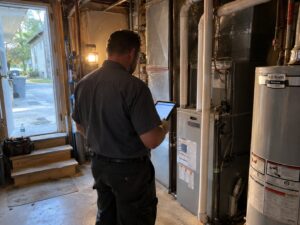
An HVAC tune-up isn’t supposed to be a filter swap and a visual look-over. Done correctly, it’s the most diagnostically intensive service most homeowners’ equipment receives all year — measurements that take ten minutes per data point, taken across combustion, refrigerant, electrical, airflow, and safety systems, compared against manufacturer specifications, and documented for warranty and reliability purposes. The difference between cheap “tune-ups” sold at $39 specials and real preventive maintenance is the difference between someone walking through your house with a clipboard and someone running combustion analysis with a calibrated analyzer.
The economics actually favor real tune-ups. The cheap version produces no measurable benefit beyond customer reassurance — equipment that was going to fail still fails, equipment that was healthy stays healthy, and the customer pays $39 for nothing of substance. The real version catches marginal components before they fail, verifies that combustion is safe and efficient, restores degraded performance to specification, and produces documentation that maintains manufacturer warranty validity. The cost difference between the cheap version and the real version is modest; the value difference is substantial.
Below is what an Aegis HVAC tune-up actually includes, when to schedule it, what the diagnostic measurements identify, and what to expect when we arrive at your home.
What’s Included in an Aegis HVAC Tune-Up
Tune-up scope varies by equipment type — furnaces, AC condensers, heat pumps, and boilers each require different specific service. Common elements across all tune-up types:
For Gas Heating Equipment (Furnaces, Boilers)
- Combustion analysis at high-fire and low-fire — CO ppm air-free in flue gas, O2 percentage, flue gas temperature, draft pressure, combustion efficiency calculation
- Gas pressure verification at inlet and manifold against manufacturer specification
- Heat exchanger inspection through inspection ports with mirror and flashlight, borescope inspection where access allows
- Ignition system service — flame sensor cleaning and microamp verification, hot surface igniter resistance check, pilot system inspection on atmospheric-vent equipment
- Inducer motor inspection — amp draw against nameplate, bearing condition, wheel cleanliness
- Blower motor inspection — amp draw, capacitor microfarad reading (PSC motors), ECM diagnostic (variable-speed motors), wheel cleanliness
- Limit switch verification — proper operation, correct settings
- Pressure switch test — verify safety circuit functions
- Static pressure measurement across the air handler
- Temperature rise across heat exchanger against manufacturer specification
- Condensate system inspection on condensing equipment — drain, trap, neutralizer
- Venting inspection — flue connections, clearances, terminations
- Ambient CO testing in mechanical room and adjacent living spaces
For Cooling Equipment (Central AC, Heat Pump Cooling Mode)
- Outdoor coil cleaning — fin straightening where bent, full rinse, debris removal from cabinet
- Refrigerant charge verification by superheat method (fixed-orifice) or subcool method (TXV/EEV) at actual operating conditions
- Suction and discharge pressure readings
- Leak inspection at exposed brazed joints, flares, Schrader valves; electronic leak detection if charge is low
- Capacitor microfarad testing on each side of dual-run capacitors against rated value
- Contactor inspection — visual check of contact surfaces, voltage drop measurement
- Compressor amp draw against nameplate
- Fan motor amp draw against nameplate
- Electrical connection tightness on all field-wired connections
- Evaporator coil inspection through access panel
- Static pressure measurement across the air handler
- Temperature differential across the coil (target 18–22°F)
- Condensate drain flush and pan inspection
- Float switch test on secondary drain pan
- Refrigerant line insulation visual check
- Disconnect inspection — proper sizing, correct fusing, weatherproof condition
For Heat Pumps (Year-Round Operation)
Heat pumps run as both heating and cooling equipment, so they get the cooling-mode tune-up plus additional heat-pump-specific service:
- Defrost cycle operation verification — defrost board function, sensor operation, defrost cycle timing
- Reversing valve operation — proper switching between heating and cooling modes, voltage check at solenoid
- Heat strip operation on all-electric installations — element testing, sequencer function
- Refrigerant charge verification in both modes — different operating pressures in heating vs. cooling
We recommend twice-yearly tune-ups on heat pumps — spring for cooling-side verification, fall for heating-side verification.
Universal Tune-Up Elements (All Equipment)
- Filter inspection and replacement if needed (standard pleated filters typically included; high-MERV media filters are an add-on)
- Return-air sizing assessment if static pressure readings suggest restriction
- Thermostat calibration check against actual room temperature
- Staging configuration verified for multi-stage equipment
- Programmable schedule review (if you want our help optimizing it)
- Smart thermostat connectivity verification on cloud-connected models
- Tune-up report emailed with all measurements recorded
- Combustion analyzer printout on gas equipment
- Photos of any findings worth documenting
- Recommendations for any issues identified, with written quotes if you’d like repair work performed
- Maintenance record added to your customer file — useful for future warranty claims
What We Look for in the Salt Lake Valley Specifically
Altitude Correction Drift
Furnaces installed at our 4,300-foot elevation require altitude-corrected gas pressure or orifice sizing per manufacturer specification. Even when properly corrected at installation, this can drift over time as gas pressure regulators age. Combustion analysis catches drift before it becomes a CO problem or efficiency loss.
Inversion-Driven Loading
Winter inversions deposit elevated PM2.5 throughout the valley, accelerating filter loading and depositing fine particulates throughout HVAC systems. Tune-ups during or immediately after inversion season often reveal filter and coil loading that warrants attention.
Cottonwood Seed in Outdoor Coils
Late May and June drop massive amounts of cottonwood seed across the valley. The fluffy seed packs into outdoor condenser coils and severely restricts airflow. Spring AC tune-ups in early May catch coils still clean; tune-ups in late June or July often involve significant coil cleaning to clear accumulated seed.
Hard Water Effects
Salt Lake’s hard water leaves mineral deposits on humidifier evaporation pads, in condensate pans and drain lines, and on evaporator coil surfaces. Tune-ups address these mineral accumulations before they cause performance or biological growth problems.
Extended Operating Hours
Inversion-driven extended heating seasons accumulate more operating hours per year than less inversion-prone climates. This shortens component service life slightly and increases the value of catching wear before failure. Capacitor microfarad readings, motor amp draws, and refrigerant charge verification are all worth more in this valley than in climates with shorter heating or cooling seasons.
Atmospheric-Vent Equipment in Older Homes
Pre-1990s homes still running 80% AFUE atmospheric-vent furnaces require specific tune-up attention — chimney draft testing, spillage testing, combustion air verification — that newer condensing furnaces don’t need. We’re comfortable with atmospheric-vent service and treat older equipment with the appropriate care.
What We Find on Typical Tune-Ups
The distribution of findings across hundreds of annual tune-ups:
- ~40% of tune-ups find equipment in good condition requiring only standard preventive service (cleaning, filter replacement, capacitor testing, minor adjustments) — no repair recommendations
- ~35% of tune-ups identify one or two minor issues worth addressing during the same visit or scheduled later — marginal capacitor, flame sensor needing cleaning, condensate drain partial blockage, refrigerant top-off after small leak repair
- ~20% of tune-ups identify significant issues warranting major repair — failed inducer motor, control board issues, refrigerant leak requiring repair, marginal heat exchanger requiring monitoring
- ~5% of tune-ups identify safety or major reliability concerns — cracked heat exchanger, elevated CO requiring immediate correction, compressor failure imminent, condensate damage requiring immediate attention
The 60% of tune-ups that find significant issues are exactly why annual maintenance pays for itself. Each identified problem is one that would otherwise become an emergency call, an avoided manufacturer warranty claim, or a safety incident.
When to Schedule
Spring AC Tune-Up
April through early May, before the first 90°F day. Catches issues from winter storage, prepares system for cooling season, addresses cottonwood season coil loading. Spring scheduling fills quickly — book March or early April for May appointments.
Fall Furnace Tune-Up
September through early October, before the first sub-freezing weather. Catches issues from summer storage, performs combustion analysis after months of inactivity, replaces humidifier pads if equipped. Fall scheduling fills as cold weather approaches — book August or September for October appointments.
Heat Pump (Twice Yearly)
Spring (April–May) for cooling-side verification, fall (September–October) for heating-side verification.
New Customer Catch-Up
If your equipment hasn’t been serviced in 2+ years, schedule whenever — we’ll perform the appropriate seasonal tune-up plus catch up on any deferred maintenance. Equipment that has been neglected for years often benefits from initial deeper service than routine annual tune-ups provide.
Tune-Up Pricing
- Single AC tune-up: $99–$179 depending on system type, accessibility, and condition
- Single furnace tune-up: $99–$179
- Single heat pump tune-up (covers both heating and cooling on a single unit): $149–$229
- Spring + fall combo for furnace plus AC scheduled together: $189–$289
- Multiple-system properties: per-system pricing with discount for multi-system service on the same visit
- Maintenance plan with bundled twice-yearly tune-ups, priority emergency scheduling, parts and repair discounts, waived diagnostic fees: $189–$329/year (see maintenance plans page)
Tune-up pricing includes all standard service items and minor adjustments (electrical connection tightening, gas pressure adjustment within manufacturer specification, condensate drain flush, filter replacement of standard pleated filters). Repair work beyond minor adjustments is quoted separately with written estimates before performing any work.
What Tune-Ups Don’t Include
Tune-up scope covers preventive service and minor adjustments. Several categories require separate quotes:
- Component replacement when something has actually failed (capacitor, contactor, igniter, sensor, motor) — typical repair pricing applies, with maintenance plan parts discounts where applicable
- Refrigerant recharge on systems with leaks — leak repair plus recharge, see refrigerant recharge page
- Coil cleaning beyond standard rinse (significant biological growth, severe mineral buildup) — additional charge for chemical cleaning
- Duct cleaning — separate service, see duct cleaning page
- IAQ equipment installation — humidifier pad replacement is included on equipped systems; new IAQ equipment installation is separate
- Major repairs identified during tune-up — quoted separately with written estimate
What Happens If We Find a Problem
Most tune-ups complete with the system in good condition. When we find an issue, we handle it three ways:
- Minor adjustment included in the tune-up — tightening loose electrical connections, adjusting gas pressure by a fraction of an inch w.c., clearing a partial condensate blockage, flame sensor cleaning, replacing a standard pleated filter. No additional charge.
- Repair recommendation with written quote — marginal capacitor, worn contactor, refrigerant leak identified during inspection. We give you the written quote and the math on why the repair makes sense; you decide whether to authorize same-visit or scheduled later.
- Major issue requiring further diagnostic — rare on routine tune-ups, but occasionally we find something that needs more time than a tune-up appointment allows. Suspected heat exchanger crack requiring borescope and isolation testing, complex control board issues. We document findings and schedule follow-up.
If we find a confirmed safety issue — elevated CO that won’t resolve through normal adjustment, a confirmed cracked heat exchanger, a venting failure allowing combustion gases into the home — we explain the implications clearly and recommend either immediate repair or temporarily shutting equipment down until repairs can be completed. Safety findings aren’t subject to “we’ll think about it” decisions.
Frequently Asked Questions
- How long does a tune-up take?
- 60–90 minutes on-site for typical residential systems. Larger systems, multi-zone installations, or systems requiring significant cleaning take longer. We don’t rush — the value of the tune-up is in the diagnostic measurements (combustion analysis, refrigerant charge verification, static pressure, electrical readings), not the speed of completion.
- Do I need to be home for the tune-up?
- Most tune-ups can be completed without you present if you’ve authorized us to enter (key holder arrangement, garage code). The tune-up report and combustion analysis printout are emailed at completion. For first-time customers we typically prefer the homeowner be present so we can walk through findings and discuss maintenance history.
- What’s the difference between a tune-up and an inspection?
- A tune-up includes cleaning, minor adjustments, and preventive service in addition to inspection. An inspection is observation-only — measurements taken, findings reported, but no service performed. Tune-ups are what most homeowners need; inspections are typically requested for real estate transactions or warranty claim documentation.
- Will the tune-up improve my system’s performance?
- Often, yes. Combustion analysis with proper gas pressure adjustment can improve furnace efficiency by several percent. Coil cleaning restores cooling capacity. Flame sensor cleaning prevents intermittent shutdowns. Refrigerant charge verification optimizes cooling and heat pump performance. On systems that have drifted out of tune over years of operation, the improvement can be substantial.
- Can I do my own tune-up?
- Some elements yes — replacing the air filter, keeping the area around equipment clear, visual inspection for obvious problems. The measurements that drive a real tune-up (combustion analysis, gas pressure verification, microamp readings, refrigerant charge by superheat or subcool method, static pressure measurement, capacitor microfarad testing) require professional tools and EPA 608 certification for refrigerant work. Most homeowners do the basic maintenance themselves and use professional service for the diagnostic measurements that require calibrated instruments.
- How often should I have my system tuned up?
- Once a year for AC-only or furnace-only systems (spring for AC, fall for furnaces). Twice a year for combined systems or heat pumps that run year-round. Some manufacturers require twice-yearly maintenance to maintain warranty coverage even on single-system equipment — check your specific warranty terms.
- Are tune-ups worth the money?
- For most homeowners, yes. On newer systems in good condition, an annual tune-up maintains warranty validity, catches small issues before they become emergencies, and provides safety verification (combustion analysis, CO testing). On older or neglected systems, tune-ups often immediately pay for themselves in caught failures or efficiency improvements. Maintenance plan customers typically save the most because bundled pricing and parts discounts compound over multiple years.
Schedule HVAC Tune-Up
Spring AC tune-up scheduling opens in March; fall furnace tune-up scheduling opens in August. Off-season scheduling available year-round. Call (385) 250-0687 to schedule or to ask questions about what’s right for your specific equipment.
- Phone: (385) 250-0687
- Email: info@aegisheatingandair.xyz
- Address: 4454 Manhattan Ct, West Valley City, UT 84120