
Heat Pump Installation and Repair in Salt Lake County
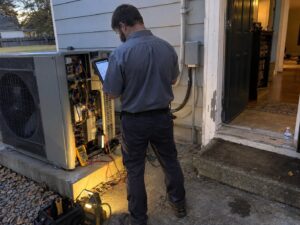
Heat pumps are the right answer for more Salt Lake Valley homes than most homeowners realize — and the wrong answer for a smaller number than the marketing materials would suggest. Modern cold-climate heat pumps (Mitsubishi Hyper-Heat, Daikin Aurora, Trane variable-capacity, Carrier Greenspeed, and similar) deliver full rated capacity at -13°F outdoor temperature, well below the 99% winter design temperature of approximately 14°F at the valley floor. That makes them a genuine option for primary heating in this climate, even before considering the federal 25C tax credit (up to $2,000 on qualifying heat pumps) and Rocky Mountain Power Wattsmart rebates that can substantially reduce the install cost.
But heat pumps aren’t a universal solution. They depend on adequate electrical capacity (older Salt Lake homes with 100A service may need an upgrade), they pair best with good envelope insulation, and the math on operating cost depends heavily on your electricity-to-gas rate ratio. For most existing homes with functional gas service and existing ductwork, the right answer is dual-fuel — a heat pump paired with a backup gas furnace. The heat pump handles 80% of the heating season efficiently; the furnace takes over below the heat pump’s economic breakeven temperature (typically 25–35°F depending on rate ratios). Pure heat pump installations work in this climate but are usually the right call only on new construction, deep retrofits, or homes already set up for all-electric operation.
Below is how we approach heat pump installation, repair, and dual-fuel configuration, what specific equipment we recommend for the Salt Lake climate, what the math looks like on operating costs, and what’s involved in deciding between a heat pump and a traditional furnace replacement.
Heat Pump Services We Offer
Heat Pump Installation
New cold-climate heat pump installation, including:
- Dual-fuel systems — heat pump paired with backup gas furnace, most common configuration for existing-home retrofits
- All-electric heat pump systems — heat pump as the sole heating source, typically with electric resistance backup for emergency conditions
- Ductless mini-split heat pumps — for additions, finished basements, garage offices, and homes without existing ductwork (see also our ductless mini-splits page)
- Multi-zone heat pump systems — multiple indoor units served from a single outdoor unit, ideal for homes where different zones have different cooling/heating loads
- Variable-capacity inverter-driven systems — Mitsubishi Hyper-Heat, Daikin Aurora, Trane XV20i, Carrier Greenspeed Infinity, and similar premium equipment
Heat Pump Repair
Diagnostic and repair on residential and light commercial heat pumps. Common service needs include reversing valve failures, defrost cycle issues, refrigerant leaks (heat pumps are particularly susceptible because they run year-round), capacitor failures, contactor failures, and outdoor unit fan motor failures. Heat pump diagnostics are more complex than straight AC diagnostics because the equipment runs in both cooling and heating modes, with different operating pressures and different failure patterns in each.
Heat Pump Maintenance
Heat pumps run year-round, which means they accumulate roughly twice the operating hours of cooling-only or heating-only equipment. We recommend twice-yearly maintenance — spring service for cooling-side verification (refrigerant charge, condenser coil cleaning, capacitor and contactor inspection) and fall service for heating-side verification (defrost cycle test, supplementary heat verification, refrigerant charge under heating conditions). See our maintenance plan options for bundled pricing.
Dual-Fuel Configuration
For customers pairing a heat pump with an existing or new gas furnace, we configure the system to switch between heat pump and furnace based on outdoor temperature. The “balance point” (the outdoor temperature below which the furnace takes over) is calculated based on your specific electricity and gas rates, the heat pump’s published capacity curve, and your home’s actual heat load. We program the thermostat to switch at the calculated balance point, ensuring you’re using the cheapest fuel source at every outdoor temperature.
How Heat Pumps Work in the Salt Lake Climate
A heat pump moves heat rather than generating it. In cooling mode, it moves heat from inside your home to outside (just like a central AC). In heating mode, it reverses the process — pulling heat from outdoor air and delivering it inside, even when the outdoor air is well below freezing. The same equipment provides both heating and cooling.
Modern cold-climate heat pumps use variable-capacity inverter compressors that can modulate their output across a wide range. At mild outdoor temperatures (40–55°F), a heat pump might run at 30% of rated capacity for steady operation. At -10°F, the same unit runs at 100% capacity, delivering its full rated heating output. The variable-capacity operation produces more consistent comfort, longer equipment life, and better efficiency than the on/off cycling of single-stage equipment.
Cold-Climate Performance
The relevant Salt Lake Valley temperature reference points:
- 99% winter design temperature: approximately 14°F at the valley floor (5% of winter hours fall below this)
- Average January low: approximately 22°F
- Average daily mean during heating season: approximately 40°F
- Extreme winter lows: -10°F to -20°F at the valley floor during the coldest inversions, with foothill areas occasionally seeing lower temperatures
Modern cold-climate heat pumps (Mitsubishi Hyper-Heat, Daikin Aurora, Trane XV20i variable-capacity, Carrier Greenspeed Infinity) maintain rated capacity at -13°F or lower. At the valley floor, where typical lows are 14°F and extremes occasionally hit -10°F, these heat pumps operate at their rated capacity for nearly all heating hours of the year. The few hours per year when outdoor temperatures drop below the heat pump’s full-capacity threshold are when the backup heat source (gas furnace in dual-fuel, electric resistance in all-electric) kicks in.
Efficiency at Cold Temperatures
Heat pump efficiency is measured by Coefficient of Performance (COP) — the ratio of heat output to electrical input. A COP of 3.0 means the heat pump delivers 3 units of heat for every 1 unit of electricity consumed. Modern cold-climate heat pumps maintain COPs above 2.0 even at very cold temperatures:
- At 47°F outdoor: COP 3.5–4.5 (delivering 3.5–4.5 units of heat per unit of electricity)
- At 17°F outdoor: COP 2.5–3.2
- At 5°F outdoor: COP 2.0–2.5
- At -13°F outdoor: COP 1.8–2.2 on the best cold-climate units
By comparison, electric resistance heat (the backup heat source on all-electric heat pump installations) has a COP of exactly 1.0 — every unit of electricity produces one unit of heat. A heat pump operating at COP 2.5 uses 60% less electricity than electric resistance heat for the same heat output. This is why heat pump electric bills are significantly lower than baseboard or electric furnace bills even in cold climates.
Compared to Gas Furnaces
Comparing heat pump to gas furnace operating costs requires knowing your local rates and the relative efficiency of the equipment. For a typical Salt Lake Valley home with Rocky Mountain Power electric rates and Dominion Energy gas rates, the rough breakeven analysis:
- At outdoor temperatures above 35°F, the heat pump is typically cheaper to operate than a 95% AFUE gas furnace
- At outdoor temperatures between 25°F and 35°F, the costs are roughly comparable
- At outdoor temperatures below 25°F, the gas furnace becomes cheaper to operate
This is why dual-fuel systems work so well in our climate — the heat pump handles the milder portion of the heating season (which is most of the heating hours) at lower operating cost, and the gas furnace takes over during the colder portion (the higher-bill period if you were running heat pump alone). Rate ratios can shift the breakeven point; we model the math in writing for any heat pump installation quote based on your actual utility bills.
Dual-Fuel: Why It’s Usually the Right Answer
For most existing Salt Lake Valley homes with functional gas service, dual-fuel is the smarter heat pump configuration. The reasons:
- Lowest operating cost. Dual-fuel ensures you’re always using the cheapest fuel source for the current outdoor temperature. Heat pump for mild weather, gas furnace for cold weather, switched automatically by the thermostat at the calculated balance point.
- Highest reliability. If the heat pump fails during a heating season, the gas furnace serves as backup heat. If the gas furnace fails, the heat pump serves as backup. Two heating systems means single-failure resilience.
- Lower electrical capacity requirements. Pure heat pump systems with electric resistance backup often require 200A electrical service. Dual-fuel systems with gas furnace backup work with existing 100A service on most homes.
- Eligibility for incentives. Dual-fuel installations qualify for the federal 25C heat pump tax credit (up to $2,000) and Rocky Mountain Power Wattsmart rebates on the heat pump portion, plus Dominion Energy Therm-Wise rebates on a qualifying high-efficiency gas furnace.
- Smoother transition. For customers with existing functional furnaces who want heat pump benefits, adding a heat pump alongside the existing furnace is less disruptive than replacing both.
All-electric heat pump systems make sense when: the home is new construction without existing gas service, the homeowner is committed to all-electric operation for environmental reasons, the home has excellent envelope insulation (which reduces heating load enough that electric backup is rarely needed), or solar/storage offsets electricity costs significantly.
Brands We Install
We’re brand-agnostic. We install Trane, Carrier, Lennox, Goodman, Rheem, Mitsubishi, Bryant, and Daikin heat pumps. Patrick is a Mitsubishi Electric Diamond Contractor — Mitsubishi’s top dealer designation with extended warranty coverage on Diamond Contractor installs.
Heat pump lineups we install most frequently:
- Mitsubishi Hyper-Heat (MUZ-FH series, MXZ multi-zone systems) — best-in-class cold-climate performance, rated for full capacity at -13°F. Patrick’s Diamond Contractor status includes 12-year extended manufacturer warranty.
- Daikin Aurora — cold-climate variable-capacity heat pumps, performance comparable to Mitsubishi Hyper-Heat
- Trane XV20i — variable-capacity inverter-driven, factory-trained installation by Travis Hollings
- Carrier Greenspeed Infinity — variable-capacity inverter, premium performance, factory-trained installation
- Lennox XP25 — variable-capacity inverter-driven, highest published HSPF2 rating in the residential market
- Bryant Evolution Extreme — Carrier-engineered variable-capacity, slightly lower price point than Carrier Infinity
- Rheem Prestige — mid-tier cold-climate heat pumps with good value
- Goodman GSZC18 — value-tier two-stage heat pumps
Heat Pump Installation Costs in Salt Lake County
- Standard single-stage heat pump replacement: $6,500–$10,500 installed
- Two-stage heat pump installation: $9,000–$14,000 installed
- Variable-capacity inverter-driven cold-climate heat pump: $14,000–$22,000 installed
- Dual-fuel system (cold-climate heat pump + 96% AFUE gas furnace): $14,000–$24,000 installed
- Ductless multi-zone heat pump (3–4 indoor heads, one outdoor unit): $14,000–$22,000 installed
- Add-ons — electrical upgrade if existing service is insufficient ($1,500–$3,500), new condenser pad, smart thermostat capable of dual-fuel staging, supplementary heat strips on all-electric installations
Available incentives often substantially reduce the net cost:
- Federal 25C Energy Efficient Home Improvement Tax Credit — up to $2,000 on qualifying heat pumps (verify eligibility with your tax preparer; heat pump must meet specific efficiency tier)
- Rocky Mountain Power Wattsmart rebates — varies by equipment SEER2/HSPF2 rating, typically $300–$1,500 on qualifying heat pumps
- Dominion Energy Therm-Wise rebates — applies to qualifying high-efficiency gas furnace component in dual-fuel installations
- Inflation Reduction Act (IRA) Home Electrification Rebates — income-qualified rebates that may apply in addition to the 25C tax credit; we’ll verify eligibility based on your specific situation
For a typical $18,000 dual-fuel installation, available incentives can reduce net cost by $3,000–$5,000 depending on equipment selected and income qualification. We model the full math in your quote so you see real out-of-pocket cost after every available rebate and credit.
Heat Pump Repair
Heat pump diagnostics are similar to AC diagnostics in many respects but add complexity for the heating-mode operation. Common heat pump-specific repair calls:
Failed Reversing Valve
The reversing valve switches the refrigerant flow direction between heating and cooling modes. When the valve fails, the heat pump either gets stuck in one mode or fails to switch between modes properly.
- Symptoms: Heat pump cools when set to heat, heats when set to cool, or fails to deliver any output. Sometimes audible clicking from the outdoor unit without successful mode change.
- Diagnostic: Pressure readings in both modes to verify proper refrigerant flow direction; voltage check at the valve solenoid; temperature readings on suction and discharge lines.
- Typical repair cost: $600–$1,400 depending on valve location and refrigerant requirements.
Defrost Cycle Problems
Heat pumps accumulate frost on the outdoor coil during heating operation in cold, humid conditions. The defrost cycle periodically reverses the system to melt accumulated frost. Defrost failures result in ice buildup on the outdoor coil, which severely reduces heating capacity.
- Symptoms: Heat pump produces less heat than normal during cold weather, visible ice on the outdoor unit, increased run times without satisfying thermostat.
- Diagnostic: Defrost board operation test, defrost sensor verification, sometimes timer override to force-initiate defrost cycle for observation.
- Typical repair cost: $300–$700 for defrost board or sensor replacement; higher if reversing valve is also affected.
Outdoor Unit Refrigerant Leak
Heat pumps are more susceptible to refrigerant leaks than cooling-only equipment because they operate year-round and the refrigerant system experiences more thermal cycling. Common leak points are the same as AC systems (Schrader valves, brazed joints, lineset connections, coil pinholes).
- Symptoms: Reduced heating and cooling capacity, ice on outdoor coil in heating mode, ice on suction line in cooling mode, system runs constantly without satisfying thermostat.
- Diagnostic: Same as AC leak detection — electronic leak detection, pressure testing, dye injection. See our refrigerant recharge page for full details on leak detection methodology.
- Typical repair cost: $400–$1,400+ depending on leak location and refrigerant quantity.
Auxiliary Heat Strip Issues (All-Electric Installations)
All-electric heat pump installations use electric resistance heat strips as backup for the heat pump during emergency conditions or extremely cold weather. Heat strip failures result in inadequate heating during the conditions that matter most.
- Symptoms: Insufficient heat during cold weather despite heat pump operating, breaker trips on heat strip circuits.
- Diagnostic: Resistance measurement of heat strip elements, sequencer function test, electrical supply verification.
- Typical repair cost: $400–$1,200 depending on strip size and access.
Frequently Asked Questions
- Do heat pumps work in Salt Lake County winters?
- Modern cold-climate heat pumps (Mitsubishi Hyper-Heat, Daikin Aurora, Trane XV20i variable-capacity, Carrier Greenspeed) maintain rated capacity at -13°F outdoor temperature, well below the 14°F Salt Lake Valley winter design temperature. They work effectively as primary heating equipment for most of the heating season. For the coldest hours of the year, a backup heat source (gas furnace in dual-fuel, electric resistance in all-electric installations) provides supplemental capacity.
- What’s the difference between a heat pump and a furnace?
- A furnace generates heat by burning fuel (natural gas, propane) or by electric resistance. A heat pump moves heat from one place to another — pulling heat from outdoor air and delivering it inside, even in cold weather. Heat pumps are typically 2–4 times more efficient than electric resistance heat and often more cost-effective than gas furnaces during milder weather. The same heat pump equipment also provides cooling in summer.
- Should I install a heat pump or replace my furnace?
- For most existing Salt Lake Valley homes with functional gas service and existing ductwork, the best answer is dual-fuel — a cold-climate heat pump paired with a backup gas furnace. The heat pump handles 80% of the heating season efficiently; the furnace takes over during the coldest weather. Pure heat pump installations work in this climate but typically only make sense for new construction, deep retrofits, all-electric homes, or homes with significant solar offsetting electricity costs.
- What’s a heat pump balance point?
- The balance point is the outdoor temperature below which a gas furnace becomes cheaper to operate than a heat pump. It’s calculated based on your specific electricity and gas rates, the heat pump’s capacity curve, and your home’s heat load. For typical Salt Lake Valley rates, the balance point is usually around 25–35°F. In dual-fuel installations, the thermostat is programmed to switch from heat pump to furnace at the calculated balance point, ensuring you’re using the cheapest fuel source at every outdoor temperature.
- How much does a heat pump cost to install in Salt Lake County?
- Standard single-stage heat pump $6,500–$10,500; two-stage $9,000–$14,000; variable-capacity cold-climate $14,000–$22,000; dual-fuel system (heat pump + gas furnace) $14,000–$24,000. Available incentives (federal 25C tax credit up to $2,000, Rocky Mountain Power Wattsmart rebates, Dominion Energy Therm-Wise rebates on dual-fuel gas furnace component) can reduce net cost by $3,000–$5,000 depending on equipment and qualification.
- How long do heat pumps last?
- Properly sized, installed, and maintained heat pumps typically last 12–15 years in the Salt Lake climate. Heat pumps run year-round, accumulating roughly twice the operating hours of cooling-only equipment, which can shorten useful life compared to AC-only systems. Variable-capacity inverter systems often last longer because their modulating operation produces less cycling stress on the compressor.
- Do heat pumps qualify for tax credits and rebates?
- Yes, on qualifying equipment. The federal 25C Energy Efficient Home Improvement Tax Credit provides up to $2,000 on qualifying heat pumps that meet efficiency requirements. Rocky Mountain Power Wattsmart rebates apply on qualifying high-efficiency heat pumps (typically $300–$1,500). Income-qualified households may also qualify for additional rebates under the Inflation Reduction Act Home Electrification programs. We model all available incentives into install quotes so you see real net cost.
Schedule Heat Pump Service
Whether you need an installation quote, a repair on an existing heat pump, or want to discuss dual-fuel options for your home, call (385) 250-0687. Free in-home estimates include Manual J load calculation, balance point modeling against your specific utility rates, and written quotes with all available rebates and tax credits modeled into net cost.
- Phone: (385) 250-0687
- Email: info@aegisheatingandair.xyz
- Address: 4454 Manhattan Ct, West Valley City, UT 84120