
HVAC Inspection and Diagnostics in Salt Lake County
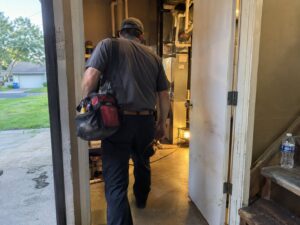
An HVAC inspection isn’t the same thing as a tune-up. A tune-up is preventive service work — cleaning, minor adjustments, filter replacement, capacitor testing, and the standard maintenance items that keep equipment running properly. An inspection is observation-only: comprehensive diagnostic measurements taken, equipment condition documented, findings reported in writing, but no service work performed. Inspections answer specific questions rather than performing routine maintenance.
Several scenarios call for standalone HVAC inspections rather than tune-ups: second opinions on quotes from other contractors (particularly large repair or replacement quotes), pre-purchase inspections for real estate transactions, warranty claim documentation when manufacturers require service records, assessments after a customer suspects a specific problem but isn’t ready to authorize repairs, and evaluations of older equipment where remaining service life is the question rather than current performance. In each of these scenarios, the customer needs information rather than service — and the inspection format delivers that information cleanly without bundled work that may not be wanted.
Below is what HVAC inspections include, when to schedule one rather than a tune-up, what specific situations they address, and how the diagnostic measurements translate into actionable information.
When HVAC Inspection Makes Sense (vs. Tune-Up)
Second Opinion on a Contractor Quote
You’ve received a quote from another contractor for significant HVAC work — heat exchanger replacement, compressor replacement, full system replacement, or other major repairs. The quote is substantial ($2,000+) and you’re not certain whether the recommended work is actually necessary or whether the diagnosis is correct.
Standalone inspection delivers an independent technical assessment with written documentation. We measure the same diagnostics the original contractor should have measured, confirm or refute their findings, and provide written documentation of our independent diagnosis. If we agree with the original contractor, you have confirmation that the work is needed. If we disagree, you have evidence to push back on the original quote or seek an alternative path. Either way, you make decisions with real information rather than blind trust in a single source.
Pre-Purchase Real Estate Inspection
Standard home inspections typically include only superficial HVAC assessment — “the system turns on” rather than measured diagnostic data. For homes with significant HVAC equipment value (recent replacement, premium systems, or older equipment where condition matters to the purchase decision), professional HVAC inspection during the due diligence period provides much more detailed information than the general home inspection.
Pre-purchase HVAC inspection includes combustion analysis, refrigerant charge verification, static pressure measurement, equipment age and condition assessment, projected remaining service life estimate, and identification of any deferred maintenance or known problems. The written report is suitable for use in purchase negotiations — either as evidence supporting price negotiation or as documentation that no negotiation is warranted.
Warranty Claim Documentation
When manufacturer warranties require maintenance records to validate claims, customers who haven’t maintained documented annual service sometimes need professional inspection to establish current equipment condition. The inspection report can support warranty discussions, document equipment condition for future reference, and identify whether current performance meets manufacturer specifications.
Suspected Specific Problems
You suspect a specific issue — maybe family members have reported flu-like symptoms that might indicate CO exposure, maybe the cooling capacity has degraded over a year or two and you want to understand why, maybe one zone of the home stays warmer than others and you want to identify the cause. Standalone inspection identifies the specific issue with diagnostic measurements before you authorize any work.
This is also valuable when the issue might be intermittent — equipment problems that come and go are easier to diagnose with sustained measurements and pattern analysis than with a single service visit.
Older Equipment Assessment
Equipment 12+ years old benefits from inspection to assess remaining useful life before deciding between continued repair and replacement. Inspection identifies current condition, projects near-term repair likelihood, and provides the technical data to support repair-vs-replace decisions. This is particularly valuable for customers planning ahead — replacing equipment proactively before it fails completely is much less disruptive than emergency replacement during the worst weather of the year.
Comprehensive IAQ Assessment
Indoor air quality inspections combining combustion analysis, CO testing throughout the home, filter and ductwork assessment, humidity measurement, and IAQ equipment evaluation. Useful for households with respiratory sensitivities, new homeowners wanting to understand baseline conditions, or customers planning IAQ upgrades who want to identify specific issues to address.
Annual Detailed Documentation
Some customers prefer comprehensive annual inspections with detailed documentation rather than tune-ups with service work bundled in. The inspection format provides more thorough documentation while leaving service work decisions to the customer based on findings.
What’s Included in an HVAC Inspection
Inspection scope is similar to tune-up diagnostic scope but without the bundled service work. Specifically:
For Gas Heating Equipment (Furnaces, Boilers)
- Combustion analysis at high-fire and low-fire — CO ppm air-free in flue gas, O2 percentage, flue gas temperature, draft pressure, combustion efficiency calculation
- Gas pressure verification at inlet and manifold against manufacturer specification
- Heat exchanger inspection through inspection ports with mirror and flashlight, borescope inspection where access allows
- Ignition system assessment — flame sensor microamp reading, hot surface igniter resistance check, ignition sequence observation
- Motor amp draws — inducer, blower
- Limit switch and safety control verification
- Static pressure measurement across the air handler
- Temperature rise across heat exchanger against manufacturer specification
- Venting inspection — flue connections, clearances, terminations
- Ambient CO testing in mechanical room and adjacent living spaces
For Cooling Equipment
- Refrigerant charge verification by superheat method (fixed-orifice) or subcool method (TXV/EEV) at actual operating conditions
- Suction and discharge pressure readings
- Capacitor microfarad testing against rated value
- Contactor inspection — visual check of contact surfaces, voltage drop measurement
- Compressor amp draw against nameplate
- Fan motor amp draw against nameplate
- Evaporator coil inspection through access panel
- Static pressure measurement across the air handler
- Temperature differential across the coil (target 18–22°F)
- Condensate system inspection — pan, drain, float switch
- Outdoor unit visual inspection — coil condition, fan blade, disconnect, lineset routing and insulation
For Heat Pumps
Combined cooling and heating mode inspection including reversing valve operation verification, defrost cycle assessment, and heating-mode refrigerant charge verification in addition to standard cooling inspections.
Universal Inspection Elements
- Visual equipment assessment — overall condition, rust, water damage, soot accumulation, electrical condition, ductwork visible from access points
- Equipment age determination from nameplate data, with projected remaining service life estimate
- Manufacturer warranty status check based on equipment registration and service history
- Filter inspection — current condition, slot dimensions, MERV appropriateness for system
- Thermostat function — calibration check, staging configuration, programmable schedule review
- Smart thermostat connectivity verification on applicable systems
- Written inspection report with all measurements, findings, and recommendations
- Combustion analyzer printout on gas equipment
- Photos of any findings worth documenting
- Written quotes for any identified repair work, with clear distinction between safety-related findings, performance-related findings, and aesthetic-only findings
What’s NOT Included in Inspections (vs. Tune-Ups)
Inspections explicitly do not include the service work that tune-ups perform:
- Component cleaning — coil cleaning, blower wheel cleaning, condensate pan cleaning, etc.
- Filter replacement — we identify when filters need replacement but don’t replace them as part of inspection scope
- Adjustments — gas pressure adjustment, electrical connection tightening, etc.
- Drain flushing — condensate drain clearance, drain pan cleaning
- Humidifier pad replacement
- Minor preventive service generally
If inspection findings warrant service work, we provide written quotes and can schedule the work as separate service visits. Some customers prefer this approach because it separates the diagnostic step from the decision-to-authorize-work step; others prefer tune-ups because the bundling is more convenient. Both approaches work — we offer both and let customers choose based on their preference.
Second-Opinion Inspections: What We Document
For customers seeking second opinions on contractor quotes, our inspection produces specific documentation:
Independent Diagnostic Confirmation
We measure the same diagnostics the original contractor should have measured and document our findings independently. If the original quote was based on actual measurements, our measurements should be similar. If our measurements differ significantly, that’s important information.
Failure Mode Verification
If the original contractor diagnosed a specific failure (cracked heat exchanger, failed compressor, refrigerant leak, etc.), we verify whether the failure mode is actually present and document the evidence. Sometimes original diagnoses are correct; sometimes they’re not. We document either outcome with photos and measurements.
Repair-vs-Replace Math
If the original quote recommended replacement when repair might be feasible, we document the math — current repair cost, projected near-term repair costs, expected remaining service life, and the economics of repair vs. replacement. Sometimes our analysis supports the original recommendation; sometimes it suggests an alternative path. Either way, the customer has documented analysis to support their decision.
Scope of Work Verification
If the original quote includes work items that don’t appear necessary based on equipment condition, we identify those items. Sometimes contractors add scope that inflates project cost without addressing actual problems; documenting this helps customers negotiate or seek alternative quotes.
Written Documentation
All findings documented in writing with photos and measurements. Suitable for use in customer-contractor negotiations or for seeking additional quotes. We don’t position ourselves against the original contractor — we provide independent technical assessment that the customer uses as they see fit.
Pre-Purchase Real Estate Inspections
Specific considerations for real estate transaction inspections:
Timing
HVAC inspections during the due diligence period — typically 5–10 days after offer acceptance. We coordinate scheduling with the buyer, seller, and listing agent as needed. Inspections are typically scheduled when the seller is not present to allow comprehensive equipment access.
Scope
Pre-purchase inspections include the standard inspection scope plus additional documentation specifically useful for purchase negotiations:
- Equipment age and condition assessment with projected remaining service life
- Identification of deferred maintenance — work that should have been done but wasn’t
- Cost estimates for identified issues — repair costs, replacement costs, IAQ upgrades, etc.
- Safety findings — particularly CO concerns, gas leaks, electrical issues
- Documentation suitable for purchase negotiation
Written Report Timing
We deliver written reports within 24 hours of the inspection visit, often same-day for inspections completed early in the day. Real estate transactions move quickly during due diligence periods, and we work to deliver findings within the timeframes that purchase decisions require.
Inspection Pricing
- Single-system HVAC inspection (residential, one heating or cooling system): $175–$275
- Combined system inspection (furnace + AC, or heat pump): $225–$375
- Comprehensive home inspection (all HVAC equipment plus IAQ assessment, CO testing, ductwork inspection): $325–$525
- Pre-purchase real estate inspection with written documentation suitable for negotiations: $250–$450 depending on equipment scope
- Second-opinion inspection on specific contractor quote: $175–$325 depending on scope of original quote
- Heat exchanger specific inspection (when heat exchanger failure is suspected): $175–$275 (see heat exchanger repair page)
- Multiple-system properties: per-system pricing with discount for inspection of multiple systems in the same visit
Inspection fees apply toward repair work if the customer authorizes us to perform identified work within a reasonable period. For customers seeking second opinions, the inspection fee is straightforward inspection-only pricing without bundled service obligations.
What Inspection Reports Look Like
Inspection reports are written documents, typically 3–6 pages depending on findings, that include:
- Customer and property information — address, date of inspection, technician name
- Equipment inventory — make, model, serial number, age, capacity, condition rating for each piece of equipment
- Measurements taken — all diagnostic readings recorded with units and reference values
- Combustion analyzer printout on gas equipment
- Findings summary — categorized as safety-related, performance-related, or aesthetic-only
- Photos of any findings worth documenting
- Recommendations with priority categorization (immediate, near-term, long-term, optional)
- Cost estimates for any recommended work
- Equipment service life projection
Reports are delivered by email within 24 hours of the inspection. Printed copies available on request.
Frequently Asked Questions
- How much does an HVAC inspection cost?
- Single-system inspection $175–$275; combined system inspection $225–$375; comprehensive home inspection $325–$525; pre-purchase real estate inspection $250–$450; second-opinion inspection $175–$325. Multiple-system properties priced per system with discounts for combined visits.
- What’s the difference between inspection and tune-up?
- Inspection is observation-only — diagnostic measurements taken, findings documented, but no service work performed. Tune-up includes diagnostic measurements plus cleaning, minor adjustments, filter replacement, capacitor testing, and other preventive service. Tune-ups are typical annual maintenance; inspections are for specific situations (second opinions, real estate, suspected problems) where information is needed without bundled service.
- How long does an HVAC inspection take?
- 60–120 minutes for typical residential inspections. Comprehensive home inspections with IAQ assessment can take 2–3 hours. We don’t rush — the value of the inspection is in thorough measurement and documentation.
- Can I use the inspection report to negotiate on a home purchase?
- Yes. Pre-purchase inspection reports document equipment condition and any issues identified in writing, which buyers commonly use during purchase negotiations. Reports include cost estimates for identified issues that can support price reduction requests or seller-funded repair requirements before closing.
- Will you tell me if another contractor’s quote is wrong?
- We document our independent technical findings without positioning ourselves against the other contractor. If our findings disagree with their diagnosis, the report documents what we found. The customer uses the documentation as they see fit — sometimes for negotiation with the original contractor, sometimes for seeking alternative quotes, sometimes for proceeding with the original work after gaining confidence in the recommendation. We don’t make accusations about other contractors; we provide independent technical assessment.
- Do you provide inspections for commercial properties?
- Yes — see our commercial HVAC maintenance page for commercial inspection services. Commercial inspections often include additional scope (multiple units, rooftop equipment, building management system integration) that residential inspections don’t require.
- Will the inspection void my equipment warranty?
- No. Inspection is observation only; we don’t perform service work that could affect warranty terms. Inspections actually support warranty validity in some cases — manufacturer warranties sometimes require periodic professional inspection or assessment, and our documentation can support warranty claims that require service records.
Schedule HVAC Inspection
Whether you need a second opinion on a contractor quote, pre-purchase real estate inspection, warranty documentation, or assessment of suspected equipment problems, call (385) 250-0687. Inspections available year-round with most appointments scheduled within 3–7 days; emergency inspections (CO detector activation, safety concerns) scheduled same-day or next-day.
- Phone: (385) 250-0687
- Email: info@aegisheatingandair.xyz
- Address: 4454 Manhattan Ct, West Valley City, UT 84120