
Emergency HVAC Repair in Salt Lake County
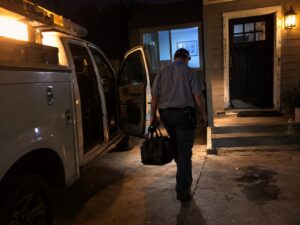
HVAC emergencies aren’t actually about HVAC. A furnace that won’t start on a 10°F night in January isn’t a heating problem — it’s a household crisis with pipe-freeze risk within hours, hypothermia risk for elderly or medically vulnerable residents, and family disruption that compounds rapidly. An AC system that fails on a 103°F July afternoon isn’t a cooling problem — it’s a heat-illness risk for infants, elderly residents, and anyone with cardiovascular or respiratory conditions. A CO detector activation isn’t a maintenance call — it’s a potentially life-threatening emergency requiring immediate response.
We treat HVAC emergencies the way they deserve to be treated. Same-day response under 2 hours for emergency calls placed before noon during peak season. After-hours emergency line monitored 24/7. Priority dispatch for confirmed safety situations (CO concerns, gas leaks, suspected combustion problems) regardless of when the call comes in. Triage based on actual risk — households with vulnerable members and active safety concerns move to the front of the line ahead of routine repair scheduling.
Below is what we treat as emergency response, what the typical sequence looks like when you call, what we recommend you do while waiting for arrival, and what to expect once we’re on-site.
What Counts as an HVAC Emergency
Genuine emergencies that get priority response:
Active Safety Emergencies
- CO detector activation — colorless, odorless, can cause illness or death depending on exposure level. Leave the home and call us after addressing the immediate safety concern (see protocol below)
- Suspected gas leak — gas odor in the home. Leave immediately, call Dominion Energy at 1-800-323-5517, and call us after the leak is identified and resolved
- Active water damage from HVAC — water leak from air handler, condensate overflow flooding floors, refrigerant line bursting
- Smoke or burning odors from HVAC equipment — electrical short, motor burnup, or combustion problem
- Visible ice formation on equipment in winter (frozen condensate line, frozen heat pump in defrost failure) requiring immediate intervention to prevent water damage
Comfort Emergencies with Risk Factors
- No heat in sub-freezing weather with elderly residents, infants, medically vulnerable household members, or pipe-freeze risk in unheated portions of the home
- No cooling during extreme heat (95°F+ days) with elderly residents, infants, medically vulnerable household members, or any household member with cardiovascular or respiratory conditions
- Heat pump failure in extreme winter weather with no backup heat source
- Furnace operating intermittently in cold weather with risk of complete failure overnight
Major Equipment Failures Affecting Habitability
- Complete heating failure during cold weather with no functional backup
- Complete cooling failure during hot weather with no functional alternative
- Boiler failure in winter — particularly serious in older homes where the boiler is the sole heat source for radiator-heated systems
- Heat exchanger failure requiring immediate equipment shutdown for safety reasons
What’s NOT an Emergency (Can Wait for Normal Scheduling)
Real emergencies get priority. Routine issues — even frustrating ones — typically wait for normal appointment scheduling within 24–72 hours:
- Equipment running but performance is degraded (uneven heating, higher utility bills, system runs constantly)
- Intermittent issues that come and go
- Thermostat problems with no immediate safety implications
- Filter loading, condensate buildup, or other maintenance issues that haven’t yet caused failure
- Quotes for replacement or upgrade work
- Schedule scheduling for tune-ups, inspections, and routine maintenance
- Comfort issues during moderate weather where no household member is at safety risk
We don’t decline these calls — we schedule them as normal service appointments. Treating non-emergencies as emergencies disrupts response capacity for genuine emergencies and shouldn’t be the standard approach.
What to Do When You Call
When you call about a potential emergency, the dispatcher (during business hours) or on-call technician (after hours) will ask several questions:
The Triage Questions
- What’s the specific symptom? No heat, no cool, smell of gas, CO alarm, water leak, smoke, etc. Be specific — “the furnace doesn’t work” is less actionable than “the furnace tries to ignite but shuts down after 5 seconds.”
- Are there immediate safety concerns? Smell of gas (call Dominion Energy first), CO alarm sounding (leave the home), active fire or smoke (call 911), water flooding rooms (turn off water if possible). Safety always takes priority over service scheduling.
- Who’s in the household? Elderly residents, infants, anyone with respiratory or cardiovascular conditions, anyone pregnant, anyone with disabilities affecting their ability to evacuate. Vulnerable household members affect response priority.
- What’s the outdoor temperature? Sub-freezing weather creates pipe-freeze risk; extreme heat creates heat illness risk; both elevate emergency priority.
- Is the equipment running, off, or in some intermediate state? A furnace cycling repeatedly without success is different from a furnace that won’t start at all.
- When did the problem start? Sudden failure vs. gradual degradation often points to different causes.
- Have you tried anything to fix it? Reset breakers, change thermostat batteries, check power switches. These rule out simple problems before we dispatch a technician.
What We Tell You
- Expected arrival window — typically 2–4 hours during business hours for genuine emergencies; 4–8 hours for after-hours emergency response depending on time of day and active call volume
- What to do while waiting — specific to your situation (instructions for CO detector activation, gas leak response, pipe-freeze prevention, heat-illness prevention, etc.)
- Diagnostic fee — typically $99–$199 for emergency response, applied toward any repair work performed during the same visit
- What to have ready — equipment access, identification of breaker panels, any equipment documentation you have available
Immediate Action Protocols
If CO Detector Activates
- Leave the home immediately with all family members and pets
- Ventilate on your way out — open doors and windows but don’t delay your exit
- Call 911 or fire department if anyone has symptoms (headache, dizziness, nausea, confusion, drowsiness)
- Don’t re-enter for extended periods until responders confirm it’s safe
- Call us at (385) 250-0687 after the immediate emergency is addressed for HVAC source identification
If You Smell Gas
- Leave the home immediately
- Don’t operate any electrical devices on the way out — light switches, garage door openers, anything that could create a spark
- From outside the home or a neighbor’s home, call Dominion Energy emergency line: 1-800-323-5517
- Don’t re-enter the home until they confirm it’s safe
- Call us after the gas leak is resolved if HVAC equipment was involved
If There’s No Heat in Sub-Freezing Weather
- Check the thermostat — set to “Heat” mode, temperature higher than current room temperature, batteries fresh if applicable
- Check the furnace breaker in your electrical panel — reset if tripped
- Check the furnace service switch — usually a regular light-switch-style switch on or near the furnace, sometimes turned off accidentally
- Replace the air filter if it looks dirty — clogged filters can shut furnaces down on high-limit protection
- Prevent pipe freeze — open faucets to drip cold water, open cabinet doors under sinks on exterior walls, keep interior doors open to maintain even temperature
- Add backup heat if available — portable electric heaters (only used safely with proper electrical capacity), gas fireplace (with adequate venting), or close off unused rooms to concentrate heat
- Call us at (385) 250-0687
If There’s No Cooling in Extreme Heat
- Check the thermostat — set to “Cool” mode, temperature lower than current room temperature, batteries fresh if applicable
- Check the breaker for the outdoor unit — reset if tripped
- Check that the indoor and outdoor units are getting power — verify the indoor blower is running
- Check the air filter — clogged filters can cause evaporator coil freezing and AC failure
- Look at the outdoor unit — verify the fan is running when the system calls for cooling. If you see ice on the suction line or the outdoor coil, turn the system off (let ice melt) and call us
- Set up backup cooling if available — portable AC unit in a bedroom (particularly important for vulnerable household members), window AC, fans, close blinds against direct sun, stay in the lowest level of the home where temperatures are coolest
- Monitor vulnerable family members for heat illness symptoms — confusion, weakness, heavy sweating then stopping sweating, rapid breathing, fast heart rate
- Call us at (385) 250-0687
If You Have a Water Leak from HVAC Equipment
- Turn off the HVAC system via the thermostat or service switch
- Locate the water source — typically the condensate pan beneath the evaporator coil, condensate drain line, refrigerant line, or air handler interior
- Contain the water — place buckets or towels to catch active leakage, especially if it’s dripping onto floors below
- Turn off the water supply to humidifiers if water seems to be coming from humidifier connections
- Call us at (385) 250-0687 — water damage compounds quickly and HVAC water leaks usually indicate problems that benefit from prompt response
What to Expect When We Arrive
Emergency response visits prioritize diagnosis and immediate corrective action. The technician’s process:
- Safety verification — confirming the immediate hazard is contained (CO levels, gas concentration, electrical safety) before proceeding with diagnostic work
- Symptom verification — observing what the system is actually doing rather than only what was described on the phone
- Diagnostic measurements — appropriate to the symptom (combustion analysis on furnace problems, electrical readings on cooling problems, ambient CO on safety concerns, etc.)
- Identification of failure mode — what specifically failed and why
- Written repair quote for any work that requires customer authorization before performing
- Immediate repair when parts are available on the truck and the work can be completed in a reasonable timeframe
- Temporary measures when full repair requires parts not available, scheduled equipment ordering, or extended work — particularly important during heating emergencies in sub-freezing weather where the home can’t be left without functional heat overnight
- Follow-up scheduling for any work that can’t be completed during the emergency visit
Common Emergency Calls and Resolutions
Winter Emergencies
Most common winter emergency calls and what we typically find:
- Furnace won’t start: Usually dirty flame sensor, failed hot surface igniter, tripped service switch, dead thermostat batteries, blocked condensate drain on condensing units, or clogged filter. Most resolve same-visit with parts stocked on our trucks.
- Furnace cycles on and off: Usually overheating from restricted airflow (dirty filter, blocked vents), failed flame sensor, failed pressure switch, or thermostat issues. Most resolve same-visit.
- Boiler stops circulating: Usually failed circulator pump (most common), failed zone valve, air binding in the system, or aquastat failure. Most resolve within 1-2 visits depending on parts availability.
- Heat pump in defrost failure: Usually failed defrost board, defrost sensor, or reversing valve. May require parts ordering for major component replacement.
- CO detector activation: Usually identifies a combustion equipment problem (heat exchanger crack, venting failure, improperly tuned combustion, atmospheric-vent back-drafting). Diagnosis and corrective work scope depends on findings; some require immediate equipment shutdown.
Summer Emergencies
Most common summer emergency calls:
- AC outdoor unit won’t start: Usually failed capacitor (most common by far), failed contactor, or tripped breaker. Most resolve in under an hour.
- AC runs but doesn’t cool: Usually low refrigerant (leak), failed compressor, restricted airflow (dirty filter, frozen coil), or duct/return air problems. Resolution depends on diagnosis.
- AC turns on and off rapidly: Usually undersized return air, dirty filter, low refrigerant, oversized equipment, or thermostat issues. Most resolve same-visit.
- Water from air handler: Usually clogged condensate drain, failed condensate pump, cracked condensate pan, or evaporator coil leak. Most resolve same-visit.
- Outdoor fan won’t run: Usually failed fan capacitor, failed fan motor, or contactor problems. Most resolve same-visit.
Emergency Response Costs
- Standard emergency diagnostic fee: $99–$199 (applied toward any repair performed during the visit)
- After-hours emergency premium (calls placed evenings, weekends, holidays): additional $50–$150 depending on time and severity
- Repair costs: Standard repair pricing per component (see relevant service pages for specifics)
- Maintenance plan customers — diagnostic fees waived; priority scheduling provided ahead of non-plan emergency calls
We don’t price-gouge during emergencies. Pricing is consistent with our standard rates regardless of when the call comes in — the only premium applied is the modest after-hours surcharge that reflects technician overtime cost for after-hours response.
How Maintenance Plans Help
Maintenance plan benefits during emergencies:
- Waived diagnostic fees on emergency calls — saves $99–$199 per emergency visit
- Priority emergency scheduling ahead of non-plan customers
- Parts and repair discounts — 10–15% off repair costs
- Lower probability of emergencies in the first place due to twice-yearly tune-ups catching issues before they become emergencies
For customers who occasionally experience emergencies, the maintenance plan typically pays back in a single emergency call due to the bundled benefits. See our maintenance plans page for details.
Frequently Asked Questions
- How fast can you respond to an HVAC emergency?
- During business hours, typical response time for genuine emergencies is under 2 hours for calls placed before noon, with same-day arrival on the vast majority of after-hours emergency calls. Emergency calls with vulnerable household members (elderly, infants, medically vulnerable) are prioritized. Pipe-freeze risk in sub-zero weather is treated as a safety emergency.
- What counts as an HVAC emergency?
- Active safety emergencies (CO detector activation, gas leak, water damage, smoke or burning odor), comfort emergencies with risk factors (no heat in sub-freezing weather with vulnerable household members, no cooling in extreme heat), and major equipment failures affecting habitability. Routine performance issues that don’t immediately threaten safety or health can typically wait for normal scheduling.
- How much does emergency HVAC service cost?
- Emergency diagnostic fee $99–$199 (applied toward any repair performed). After-hours emergency premium adds $50–$150 depending on time. Repair costs match standard repair pricing per component. Maintenance plan customers have diagnostic fees waived. We don’t price-gouge during emergencies.
- What should I do until the technician arrives?
- Depends on the specific emergency. For safety emergencies (CO activation, gas leak, smoke): leave the home, call 911 or appropriate emergency line, don’t re-enter until cleared. For no-heat in cold weather: prevent pipe freezing by dripping faucets, opening cabinet doors on exterior walls, adding backup heat if available. For no-cool in extreme heat: monitor vulnerable family members for heat illness, use backup cooling, stay in coolest part of home.
- Can I prevent emergency calls?
- Mostly yes. Annual professional maintenance catches the marginal components, drift in combustion settings, refrigerant leaks, and other issues before they fail completely. Customers who maintain twice-yearly tune-ups have noticeably fewer emergency calls than customers who skip maintenance until something breaks.
- Do you have 24/7 emergency response?
- Yes — our emergency line is monitored 24/7 by our on-call technician. After-hours response carries a modest premium but provides same-day response for confirmed emergencies. Routine non-emergency calls placed after hours are scheduled for normal next-day appointments.
- What if my emergency is on a holiday?
- Emergency response is available on holidays. Office hours are closed on holidays, but the emergency line is monitored and on-call technicians respond to genuine emergencies (safety issues, no-heat in cold weather, no-cool in extreme heat). After-hours premium applies to holiday response.
Emergency Contact Information
For confirmed HVAC emergencies, call (385) 250-0687. The number routes to our on-call technician after business hours for after-hours emergency response.
- Phone: (385) 250-0687
- Email: info@aegisheatingandair.xyz
- Address: 4454 Manhattan Ct, West Valley City, UT 84120
Other emergency numbers:
- Gas leak emergency (Dominion Energy): 1-800-323-5517
- Fire, medical, police emergency: 911
- Poison Control (CO exposure questions): 1-800-222-1222