
Furnace Tune-Up in Salt Lake County
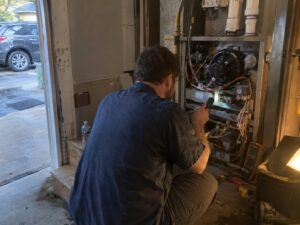
Most furnace failures don’t happen randomly — they happen at the worst possible moment. A flame sensor that was reading 0.4 µA instead of its healthy 4–6 µA in October finally drops below the detection threshold during a 12°F night in January. A condensate drain that was 60% blocked all fall finally clogs over a holiday weekend, trips the pressure switch, and locks out the furnace. A hot surface igniter that was reading 65 ohms (within tolerance but trending upward) finally cracks on the third start of the morning. Each of those failures was visible to anyone measuring with the right tools. Each of them is what a fall furnace tune-up is designed to catch.
The math is straightforward. A $130 tune-up that catches a marginal flame sensor before it fails saves you a $300 emergency service call at 2am. A combustion analysis that flags elevated CO before it becomes a safety hazard prevents a much larger problem. A heat exchanger inspection that catches early corrosion before it cracks gives you warning to plan for warranty replacement rather than an emergency furnace swap during the first deep cold snap. Beyond immediate savings, most manufacturer warranties require documented annual professional maintenance to remain valid — skip the tune-up, and a 20-year heat exchanger warranty can become a denied claim.
Below is what’s included in an Aegis furnace tune-up, when to schedule it, what we’re looking for during inspection, and what we’ll do if we find something that needs attention.
What’s Included in an Aegis Furnace Tune-Up
A furnace tune-up is more than a filter swap and a visual look-over. Every tune-up we perform includes the following measurements and services:
Combustion Analysis
The single most important measurement during a furnace tune-up. Combustion analysis tells us whether the furnace is burning gas cleanly and safely, whether the heat exchanger is healthy, and whether altitude correction is still set correctly. We measure:
- CO ppm in the flue gas at high-fire and low-fire — target under 100 ppm air-free, ideally under 50. Elevated readings indicate combustion problems (insufficient combustion air, dirty burners, improper gas pressure, altitude correction issues, or heat exchanger damage).
- O2 percentage in the flue gas — typically 6–9% on properly tuned residential furnaces. Out-of-range readings indicate either insufficient combustion air (low O2) or excessive draft (high O2).
- Flue gas temperature — varies by furnace efficiency. Helps identify heat exchanger problems and combustion issues.
- Draft pressure at the inducer (induced draft furnaces) or atmospheric draft hood (atmospheric vent furnaces) against manufacturer specification
- Combustion efficiency calculation from the above measurements
Most contractors don’t own combustion analyzers ($800–$2,000 in equipment cost). Some who own them don’t use them on routine tune-ups. We use ours on every visit because it’s the only diagnostic that catches early-stage combustion problems and CO safety issues before they become emergencies.
Gas Pressure Verification
- Inlet gas pressure from the gas line to the furnace gas valve (typically 7″ w.c. for natural gas residential)
- Manifold gas pressure from the gas valve to the burners (typically 3.5″ w.c. for natural gas residential, sometimes different for specific high-efficiency models per manufacturer spec)
- Pressure adjustment if readings are outside manufacturer specification — under-fired or over-fired furnaces produce CO and combustion efficiency problems
Heat Exchanger Inspection
- Visual inspection through inspection ports with mirror and flashlight where access allows
- Borescope inspection for tighter access or when visual inspection raises concerns
- Indirect indicators — combustion analysis patterns that suggest heat exchanger problems (CO patterns that increase when the blower starts, sudden temperature differential changes between blower stages)
- Documentation of findings — photos if anything is visible that warrants attention or future monitoring
Cracked heat exchangers are safety hazards. Catching early-stage damage during routine tune-ups (rust accumulation, scale buildup, visible crack patterns) gives you time to plan warranty replacement or system replacement before the situation becomes emergency-driven.
Ignition System Service
- Flame sensor cleaning — the single most common preventive service item on tune-ups. We remove the sensor, clean the rod with appropriate abrasive, reinstall, and verify the microamp reading is in healthy range (typically 4–10 µA after cleaning)
- Hot surface igniter inspection — visual condition check, resistance measurement against rated value (typically 40–80 ohms), recommendation for replacement if reading is marginal
- Pilot system inspection on older atmospheric-vent furnaces with standing pilots — pilot flame quality, thermocouple millivolt reading, pilot adjustment
- Burner inspection — visual check for proper flame pattern, color (should be blue with minimal yellow tipping), and burner cleanliness
Electrical and Mechanical Inspection
- Inducer motor inspection — amp draw against nameplate, bearing condition by feel and sound, wheel cleanliness
- Blower motor inspection — amp draw against nameplate, capacitor microfarad reading (PSC motors), ECM module diagnostic (variable-speed motors), bearing condition
- Blower wheel cleanliness — dirt accumulation on blower wheels significantly reduces airflow and equipment efficiency. We inspect visually and recommend cleaning if buildup is significant.
- Limit switch verification — proper operation, no jumpering, correct setting
- Pressure switch test — verifies the safety circuit functions correctly
- Electrical connection tightness on all field-wired connections
Airflow and Static Pressure
- Static pressure measurement across the air handler — the single best indicator of duct system health
- Temperature rise across the heat exchanger against manufacturer specification (typically 35–65°F range)
- Filter inspection and replacement if needed (standard pleated filters typically included; high-MERV media filters are an add-on)
- Return-air sizing assessment if static pressure readings suggest restriction
Condensate System (Condensing Furnaces)
- Condensate drain inspection — proper pitch, no blockages, no algae buildup
- Condensate trap inspection — proper water seal, no blockage
- Drain line flush if buildup is present
- Neutralizer inspection where installed — replacement timing
Venting Inspection
- Flue connections — secure, sealed, no signs of leakage or back-drafting
- Vent pipe clearances — clearance to combustibles, openable windows, fresh air intakes
- Termination inspection — proper clearance to grade, vegetation, and obstructions
- On atmospheric-vent furnaces — chimney connection condition, draft hood condition, spillage test
- On condensing furnaces — PVC venting integrity, slope, support
Ambient CO Testing
- CO reading in the mechanical room during furnace operation
- CO reading in living spaces if requested or if mechanical room readings raise concerns
- CO detector inspection in the home — placement, age, battery status
Thermostat and Controls
- Thermostat calibration check against actual room temperature
- Staging configuration verified for two-stage and modulating equipment
- Programmable schedule review (if you want our help optimizing it)
- Smart thermostat connectivity verification on cloud-connected models
Documentation
- Tune-up report emailed to you with all measurements recorded
- Combustion analyzer printout showing CO, O2, draft, and efficiency calculations
- Photos of any findings worth documenting
- Recommendations for any issues identified, with written quotes if you’d like repair work performed
- Maintenance record added to your customer file — important for future warranty claims
When to Schedule Furnace Tune-Up
Fall is the right answer — before the first sub-freezing weather. Specifically:
- September through early October is ideal. The weather is mild, our schedule is open, and any repairs identified during the tune-up can be completed before peak heating demand.
- Late October and early November work too but our schedule starts filling as the first cold snaps approach.
- December and January are when most customers call for tune-up — usually right after their furnace has a problem. By that point, emergency calls dominate the schedule and tune-up appointments are harder to book quickly.
For heat pumps that run year-round in heating and cooling, we recommend two tune-ups per year — fall for heating-side verification, spring for cooling-side verification. The system runs as both heater and AC, so it accumulates twice the hours and benefits from twice the maintenance.
What We Look for in the Salt Lake Valley Specifically
Inversion-Related Combustion Issues
During winter inversions, atmospheric pressure changes can affect natural draft on atmospheric-vent furnaces. Combustion air supply also matters more during inversions because homes stay tightly closed for extended periods, reducing natural air infiltration. Tune-ups during inversion season often reveal combustion problems that didn’t show up during milder weather.
Altitude Correction Verification
Salt Lake’s 4,300-foot elevation requires altitude-corrected combustion settings (different orifices or input adjustments per manufacturer specification). Furnaces installed by contractors who skipped altitude correction often show elevated CO and reduced efficiency during combustion analysis. Catching this during a tune-up allows correction before it becomes a safety issue.
Older Atmospheric-Vent Furnaces
Pre-1990s Salt Lake homes (common in Salt Lake City, older West Valley neighborhoods, parts of Kearns and Magna) often still have 80% AFUE atmospheric-vent furnaces with masonry chimney or B-vent venting. These systems require specific tune-up attention — chimney draft testing, spillage testing, combustion air verification — that newer condensing furnaces don’t need. Many local contractors aren’t comfortable working on atmospheric-vent systems; we are.
Heat Exchanger Wear Patterns
The valley’s extended heating seasons accumulate more thermal cycling on heat exchangers than less inversion-prone climates. We watch for early signs of heat exchanger fatigue — rust accumulation, scale buildup, hairline crack patterns visible by borescope — that develop sooner here than equipment manufacturers’ design assumptions suggest.
Dust and Pollutant Loading
Inversions deposit fine particulate matter (PM2.5) throughout the valley, much of which ends up in indoor air. This increases filter loading — even premium pleated filters can need monthly replacement during inversion months. Tune-ups in the valley often reveal filters that should have been changed weeks earlier; we use the inspection as an opportunity to set realistic filter-change expectations with customers.
What Happens If We Find a Problem
Most tune-ups complete with the system in good condition — that’s the normal outcome on a properly installed and regularly maintained furnace. When we do find an issue, we handle it three ways:
- Minor adjustment included in the tune-up — tightening a loose electrical connection, adjusting gas pressure by a fraction of an inch w.c., clearing a partial condensate blockage, flame sensor cleaning, replacing a standard pleated filter. No additional charge.
- Repair recommendation with written quote — a marginal hot surface igniter, an inducer motor with elevated amp draw, a control board with intermittent fault codes, a flame sensor that won’t clean adequately. We give you the written quote and the math on why the repair makes sense; you decide whether to authorize the work, either same-visit or scheduled later.
- Major issue requiring further diagnostic — rare on a routine tune-up, but occasionally we find something that needs more time than a tune-up appointment allows. Suspected heat exchanger crack requiring borescope and isolation testing, complex control board issues, gas valve problems requiring extended diagnostic. We document findings and schedule a follow-up.
If we find a confirmed safety issue — elevated CO that won’t resolve through normal adjustment, a confirmed cracked heat exchanger, a flue venting problem allowing combustion gases into the home — we’ll explain the implications clearly and recommend either immediate repair or temporarily shutting the furnace down until repairs can be completed. Safety issues aren’t subject to “we’ll think about it” — they’re disclosed in writing so you can make informed decisions.
Tune-Up Pricing
- Single furnace tune-up — typically $99–$179 depending on system type, accessibility, and condition
- Heat pump tune-up (covers both heating and cooling on a single unit) — typically $149–$229
- Fall + spring combo for furnace plus AC — typically $189–$289 if scheduled together
- Multiple-system properties — pricing per system, with discount for multi-system service on the same visit
- Maintenance plan — twice-yearly tune-ups (fall furnace + spring AC), priority emergency scheduling, parts and repair discounts, waived diagnostic fees — runs $189–$329/year depending on equipment and coverage level. See our maintenance plans page.
Maintenance plan customers typically save money in their first emergency repair call — the waived diagnostic fee alone is often enough to pay back the plan, and parts discounts apply on any repairs needed during the year.
Why Manufacturer Warranties Require It
Most major HVAC manufacturers (Trane, Carrier, Lennox, Goodman, Rheem, Bryant, Daikin) include language in their warranty terms requiring documented annual professional maintenance to maintain coverage. The reasoning is fair — equipment that’s not maintained develops issues that cause major component failures, and the manufacturer doesn’t want to cover failures caused by neglect.
In practice, this matters when a major component fails years into ownership — a cracked heat exchanger at year 12 on a 20-year warranty, a failed inducer motor at year 7 on a 10-year warranty. The manufacturer reviews maintenance records before approving the warranty claim. Customers without records get claims denied; customers with documented annual maintenance get claims paid. We keep maintenance records on every customer in our system — if you ever need to substantiate maintenance history for a warranty claim, we can produce documented service records on request.
Frequently Asked Questions
- How long does a furnace tune-up take?
- A typical residential furnace tune-up runs 60–90 minutes on-site. Systems that require significant combustion adjustment, condensate work, or that have multiple zones can run longer. We don’t rush — the value of the tune-up is in the diagnostic measurements (combustion analysis, gas pressure verification, static pressure, electrical readings), not the speed of completion.
- Do I need to be home for the tune-up?
- Most tune-ups can be completed without the homeowner present if you’ve authorized us to enter (key holder arrangement, garage code, smart lock access). The tune-up report and combustion analysis printout are emailed to you at completion. For first-time customers we usually prefer the homeowner be present so we can walk through findings and discuss any maintenance history we should know about.
- What’s the difference between a tune-up and an inspection?
- A tune-up includes cleaning, minor adjustments, and preventive service in addition to inspection. An inspection is observation-only — measurements taken, findings reported, but no service performed. Tune-ups are what most homeowners actually need; inspections are typically requested before real estate transactions, for warranty claim documentation, or when a homeowner suspects a problem but isn’t ready to authorize repair work.
- Will the tune-up improve my furnace’s performance?
- Often, yes. A combustion analysis with proper gas pressure adjustment can improve efficiency by several percent on a furnace that’s drifted out of tune. Flame sensor cleaning prevents intermittent shutdowns. Filter replacement and blower wheel cleaning restore proper airflow. On a system that’s been neglected for years, the improvement after tune-up can be substantial — particularly in terms of reliability and reduced no-heat calls.
- Can I do my own furnace tune-up?
- Some elements yes — replacing the air filter, keeping the area around the furnace clear, visually inspecting for obvious problems (rust, water leaks, soot accumulation). The measurements that drive a real tune-up (combustion analysis, gas pressure verification, microamp readings on flame sensors, heat exchanger inspection) require professional tools and training. Combustion analysis in particular is the diagnostic that catches CO safety issues, and it’s not feasible to perform with consumer tools.
- How often should I have my furnace tuned up?
- Once a year for furnace-only systems, in fall before peak heating. Twice a year for heat pumps (spring and fall) since they run year-round. Some manufacturers require twice-yearly maintenance to maintain warranty coverage even on furnace-only systems — check your specific warranty terms or ask us. Properly maintained equipment typically lasts 15–20 years; neglected equipment often fails in 8–12 years.
- Are furnace tune-ups worth the money?
- For most homeowners, yes — but the math depends on your situation. On a newer system in good condition, an annual tune-up costs $99–$179 and may not produce dramatic immediate savings, but it maintains warranty validity, catches small issues before they become emergencies, and provides CO safety verification. On an older or neglected system, a tune-up often immediately pays for itself in caught failures or efficiency improvements. Maintenance plan customers typically save the most because the bundled pricing and parts discounts compound over multiple years.
Schedule Furnace Tune-Up
Fall scheduling fills up quickly. The best time to book is August or September for a September or October appointment, before the first cold snap creates demand for emergency service.
- Phone: (385) 250-0687
- Email: info@aegisheatingandair.xyz
- Address: 4454 Manhattan Ct, West Valley City, UT 84120