
Gas Line Installation in Salt Lake County
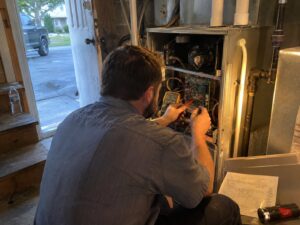
Natural gas piping is a regulated trade for good reasons. Improper gas line work doesn’t just cause inconvenience — it causes fires, explosions, and carbon monoxide poisoning. Utah Mechanical Code and Utah Plumbing Code both regulate gas line work, requiring licensed plumber or HVAC contractor involvement for installations above specified scopes. Permits and inspections are typically required. Pressure testing is required. Material specifications matter — black iron pipe for most residential applications, with specific exceptions; flexible CSST (corrugated stainless steel tubing) for applications where its installation requirements are properly followed; brass and copper restricted to specific applications under specific code provisions. None of this is optional, and contractors who treat it as optional create real safety hazards for the families living in the homes they work on.
Aegis handles gas line work because it intersects directly with HVAC equipment installation. New furnaces sometimes require larger gas lines than the equipment they replace. High-efficiency boilers often require specific inlet pressures and gas pipe sizing per manufacturer specification. New gas appliances require gas line extensions or new branches. Relocated HVAC equipment requires gas line re-routing. Most of our gas line installations are HVAC-driven — installed as part of furnace replacements, boiler installations, gas range installations during kitchen remodels coordinated with HVAC work, or new construction projects. Standalone gas line work for non-HVAC applications (relocating a gas fireplace, installing a gas grill, etc.) is also available but isn’t our primary scope.
Travis Hollings, our lead installer, holds a Utah journeyman plumber endorsement that covers gas line work under Utah Plumbing Code and Utah Mechanical Code. All Aegis gas line work is performed by Travis or under his direct supervision, with permits filed and inspections coordinated as required by local jurisdiction.
When Gas Line Work Is Required
Common scenarios where gas line installation or modification becomes necessary:
HVAC Equipment Replacement Requiring Larger Gas Line
Older homes were often piped with gas lines sized for the original equipment’s input rating. Modern high-efficiency equipment sometimes has different input requirements than the equipment it replaces — typically because:
- The new furnace’s input rating is higher than the original equipment
- The new furnace’s manifold pressure specification requires higher inlet pressure than the existing line can deliver under load
- Additional gas appliances have been added to the home since the original gas line installation (gas water heater, gas range, gas dryer, second furnace for added space), and the cumulative load now exceeds the line’s capacity
- Distance from the gas meter to the new equipment is longer than the original line was sized for
Gas line sizing is calculated using pressure drop tables in the International Fuel Gas Code, factoring in the total connected load (BTU/hour input of all appliances), the longest run length, and the number of fittings along the run. Undersized gas lines cause pressure drop that prevents equipment from operating at rated input — the furnace fires but produces less heat than the nameplate indicates, often without obvious symptoms beyond inadequate heating.
New Gas Appliance Installation
Adding a gas-burning appliance to a home that didn’t previously have one requires a new gas line run from the gas meter or from a properly sized branch off existing lines:
- Converting an electric range or cooktop to gas
- Adding a gas water heater
- Adding a gas fireplace insert
- Adding a gas dryer
- Adding a gas grill or outdoor cooking appliance with permanent gas connection
- Adding a gas pool or spa heater
- Adding a generator with natural gas fuel
HVAC Equipment Relocation
Moving the furnace or boiler to a different location in the home (during basement finishing projects, mechanical room reconfiguration, or major remodels) requires gas line re-routing. Existing line is capped at the original location; new line is run to the new equipment location, properly sized for the equipment’s input and the new run length.
Gas Line Repair or Replacement
Older gas lines can develop problems requiring replacement:
- Galvanized steel gas lines (common in pre-1960s installations) can corrode internally, reducing flow capacity. Replacement with black iron pipe restores proper flow.
- Joint leakage on older threaded connections — pipe dope or thread sealant has dried out and joints leak slightly. Repair involves disassembly, joint cleaning, and re-doping.
- Physical damage from settling foundations, construction activity, or other causes. Damaged sections require replacement.
- CSST corrosion or lightning damage on flexible tubing installations. Damaged sections require replacement.
Gas Meter Upgrade Coordination
When the total gas load on a home exceeds the capacity of the existing Dominion Energy gas meter, the meter must be upgraded to a larger capacity. We coordinate meter upgrades with Dominion Energy when adding equipment pushes the total load past the existing meter’s rating. The meter upgrade itself is performed by Dominion Energy at their cost in most cases; we handle the customer-side piping changes that often accompany the upgrade.
Gas Line Materials We Use
Black Iron Pipe
Standard material for most residential gas line work — Schedule 40 black iron pipe with threaded fittings. Durable, code-compliant for virtually all applications, and the material most jurisdictions prefer for permitted gas line work. Installation requires proper threading, joint compound application, and pressure testing per code.
CSST (Corrugated Stainless Steel Tubing)
Flexible stainless steel tubing used for specific applications where rigid black iron pipe would be impractical (long runs through completed walls, retrofit installations where access is limited, applications where flexibility for vibration isolation matters). CSST has specific bonding and grounding requirements per electrical code to mitigate lightning strike risks; we follow these requirements per Utah code adoption.
We use CSST when application warrants it, not as a default choice. Some contractors use CSST for everything because it’s faster to install. We default to black iron pipe for most residential applications because of its durability, code compliance simplicity, and lower long-term failure rates. CSST has its place; it’s not the right choice for every installation.
Copper
Restricted to specific applications under Utah code adoption — not generally allowed for primary residential gas distribution. Where copper is permitted (specific appliance connections, certain commercial applications), we use it appropriately. Where it isn’t permitted, we use code-compliant alternatives regardless of whether copper would be faster or cheaper.
Our Gas Line Installation Process
1. Site Assessment and Load Calculation
We measure the existing gas line system from the meter to all appliances, calculate the total connected load, and determine whether the new appliance or modification can be served by existing lines or requires new piping. The assessment includes:
- Verification of gas meter capacity (in BTU/hour or cubic feet per hour)
- Inventory of all existing gas appliances and their input ratings
- Measurement of existing line sizes and longest run lengths
- Pressure drop calculation using International Fuel Gas Code tables
- Identification of any required modifications (line replacement, branch additions, regulator changes)
- Coordination with Dominion Energy if meter upgrade is required
2. Permit Filing
Gas line work typically requires permits in Salt Lake County jurisdictions. We file permits in your jurisdiction (West Valley City, Kearns, Magna, Taylorsville, West Jordan, Salt Lake City — each has slightly different permit processes), coordinate inspections, and ensure all required documentation is on file. Customers attempting DIY gas line work often skip permits; this creates problems at resale (inspectors find unpermitted work and require correction) and creates safety risks (no third-party inspection of the work).
3. Installation
The actual gas line installation involves:
- Material preparation — cutting pipe to length, threading ends, deburring
- Joint assembly — applying appropriate thread sealant (pipe dope rated for gas service), threading joints together, tightening to proper torque
- Routing — proper support every 6 feet on horizontal runs (Utah Mechanical Code), proper clearance from electrical components, no embedded routing in concrete or behind finished wall surfaces without access
- Shutoffs — accessible appliance shutoff valves at each connection point
- Drip legs — gas drip legs at each appliance connection to catch any moisture or debris in the gas stream
- Sediment traps where required by code
- Bonding on CSST installations per electrical code
4. Pressure Testing
All gas line installations must be pressure-tested before they can be put into service. Standard test procedure:
- Isolate the new piping from the existing system and from appliances
- Pressurize the new piping to test pressure (typically 1.5 times working pressure, minimum 3 PSI for residential)
- Hold pressure for the test duration required by code (typically 15 minutes minimum for residential, sometimes longer)
- Verify no pressure decay during the test period
- Document test pressure, duration, and result for inspection
Pressure tests that fail indicate leaks — we locate the leak using leak detection solution (soap bubble test) and repair before retesting. New piping doesn’t get put into service until it passes pressure test.
5. Inspection
The local jurisdiction’s inspector visits to verify the work meets code. We coordinate inspection scheduling and meet the inspector on-site. Inspector verifies pipe sizing, routing, support, joint quality, pressure test documentation, and compliance with applicable code provisions. Once passed, the inspection certificate is provided for your records and goes into the home’s permanent record.
6. Service Activation
After inspection approval, we put the new line into service:
- Connect new line to existing system at the meter or branch point
- Open shutoffs and verify proper gas flow to new appliance(s)
- Light pilot or commission the appliance per its installation requirements
- Final leak check at all joints using leak detection solution
- Combustion analysis on gas appliances to verify proper operation at full input
Common Gas Line Projects and Pricing
- Gas line modification for furnace replacement (upsizing existing line to accommodate new equipment): typically $400–$900 depending on run length and access
- New gas line run for gas range (from existing branch to kitchen, ¼” — 2 sf required minimum): typically $600–$1,400 depending on run length and access
- New gas line run for gas dryer: typically $500–$1,200
- New gas line for outdoor grill (from interior gas line system through exterior wall to grill location): typically $700–$1,500 depending on routing complexity
- Gas line extension for new water heater location: typically $500–$1,200
- HVAC equipment relocation with gas line re-routing: typically $800–$2,500 depending on new run length and existing piping modifications
- Replacement of galvanized gas line with black iron (whole-home re-piping): typically $2,500–$6,500 depending on home size and accessibility
- Gas line repair (localized leak repair, damaged section replacement): typically $300–$1,000 depending on extent
- Whole-home gas line load calculation and pressure test (without installation work): $250–$500 — useful for pre-purchase inspections or before adding significant load
Pricing includes permits, materials, labor, pressure testing, and inspection coordination. Final cost depends on jurisdiction permit fees, specific run length, accessibility, and any unforeseen conditions encountered during the work.
Why DIY Gas Line Work Is a Bad Idea
Several reasons:
- Safety. Gas leaks cause fires, explosions, and carbon monoxide poisoning. DIY work that doesn’t follow proper procedures (correct materials, proper joint sealing, pressure testing, proper sizing) creates real safety hazards. Most DIY gas line incidents trace to inadequate testing and improper material selection.
- Code requirements. Utah Plumbing Code and Utah Mechanical Code require licensed plumber or HVAC contractor involvement for most gas line work. DIY installation that bypasses code requirements creates legal liability and resale problems.
- Permits and inspections. Permits typically require licensed contractor involvement. Inspections verify code compliance. DIY installations without permits and inspections often have to be re-done by a licensed contractor before the home can be sold.
- Insurance. Homeowner’s insurance may deny claims related to fires or explosions caused by unpermitted gas line work performed by the homeowner.
- Pressure testing. Proper pressure testing requires specific equipment and techniques. DIY pressure testing using shop air gauges and approximate hold times doesn’t replicate the standards that code requires.
- Joint quality. Threaded gas line joints require specific thread engagement, proper joint compound application, and torque levels that produce reliable seals. DIY joints that look fine often leak slightly — sometimes too slightly for soap-bubble detection but enough to leak measurable gas over months or years.
Some DIY tasks make sense for handy homeowners. Gas line work isn’t one of them.
Salt Lake County Gas Service
Natural gas service across Salt Lake County is provided by Dominion Energy (formerly Questar Gas before the 2016 acquisition). Service standards, meter sizing, customer-side piping requirements, and emergency response all follow Dominion Energy’s published procedures coordinated with Utah Mechanical Code.
Gas leak emergency line: Dominion Energy 1-800-323-5517. If you smell gas, leave the home, call from outside or a neighbor’s home, and don’t operate light switches, garage door openers, or other electrical devices that could create a spark.
Frequently Asked Questions
- How much does gas line installation cost in Salt Lake County?
- Typical projects: gas line modification for furnace replacement $400–$900; new line for gas range $600–$1,400; new line for gas dryer $500–$1,200; new outdoor grill line $700–$1,500; HVAC equipment relocation with gas re-routing $800–$2,500; whole-home replacement of galvanized lines $2,500–$6,500. Final cost depends on run length, accessibility, jurisdiction permit fees, and existing conditions.
- Do I need a permit for gas line work?
- Yes, in nearly all Salt Lake County jurisdictions. Mechanical permits and sometimes separate plumbing permits are required for new gas line installations, modifications, and most repairs. We file permits as part of every gas line installation and coordinate inspections with the jurisdiction. DIY installations that skip permits create problems at resale and create safety risks from the absence of inspection.
- Why does my new high-efficiency furnace need a different gas line?
- Several possibilities: the new furnace has higher input rating than the old one and the existing line is too small to deliver adequate flow; the new furnace requires higher inlet pressure than the existing line provides under load; cumulative gas load on the home has grown since the original line was installed; or the new equipment is located further from the meter than the original equipment. Proper gas line sizing for new HVAC equipment is part of every furnace and boiler installation we perform.
- What’s the difference between black iron pipe and CSST?
- Black iron is rigid threaded steel pipe — standard for residential gas distribution, durable, code-compliant for virtually all applications. CSST (corrugated stainless steel tubing) is flexible stainless steel tubing for specific applications where flexibility matters — long runs through completed walls, retrofit installations with limited access, vibration isolation requirements. We use black iron for most applications as the default, CSST where its specific advantages justify it.
- I smell gas. What should I do?
- Leave the home immediately. Don’t operate any electrical devices on the way out (light switches, garage door openers, phones connected to chargers, anything that could create a spark). From outside the home or from a neighbor’s home, call Dominion Energy’s emergency line at 1-800-323-5517. They will dispatch immediately and respond to the leak. Don’t re-enter the home until they confirm it’s safe. Once the immediate gas leak is resolved, call us if HVAC equipment was involved or if you need ongoing repair work.
- Can I add a gas grill connection to my existing line?
- Often yes, but it requires proper sizing verification. The grill’s input rating adds to the home’s total gas load, and the existing line capacity needs to handle the combined load with adequate pressure for all appliances. We perform load calculation as part of the estimate to verify whether existing lines can accommodate the grill or whether new piping is required.
- How long does gas line installation take?
- Most residential gas line installations are completed in one day, typically 4–8 hours of on-site work plus permit coordination time. More complex projects (whole-home re-piping, multiple branch additions, HVAC equipment relocation with gas re-routing) can take 1–3 days. Permit and inspection scheduling adds calendar time beyond the actual work duration — usually 1–2 weeks from permit application to final inspection completion.
Schedule Gas Line Installation
Whether you need gas line modifications for HVAC equipment replacement, a new line for a gas appliance addition, or gas line repair on existing piping, call (385) 250-0687. All gas line work is performed by Travis Hollings under his Utah journeyman plumber endorsement, with permits filed and inspections coordinated with the local jurisdiction.
- Phone: (385) 250-0687
- Email: info@aegisheatingandair.xyz
- Address: 4454 Manhattan Ct, West Valley City, UT 84120
Gas leak emergency: Dominion Energy 1-800-323-5517 (24/7). Aegis is not an emergency gas leak response — call Dominion Energy first for active leaks.