
Before and after
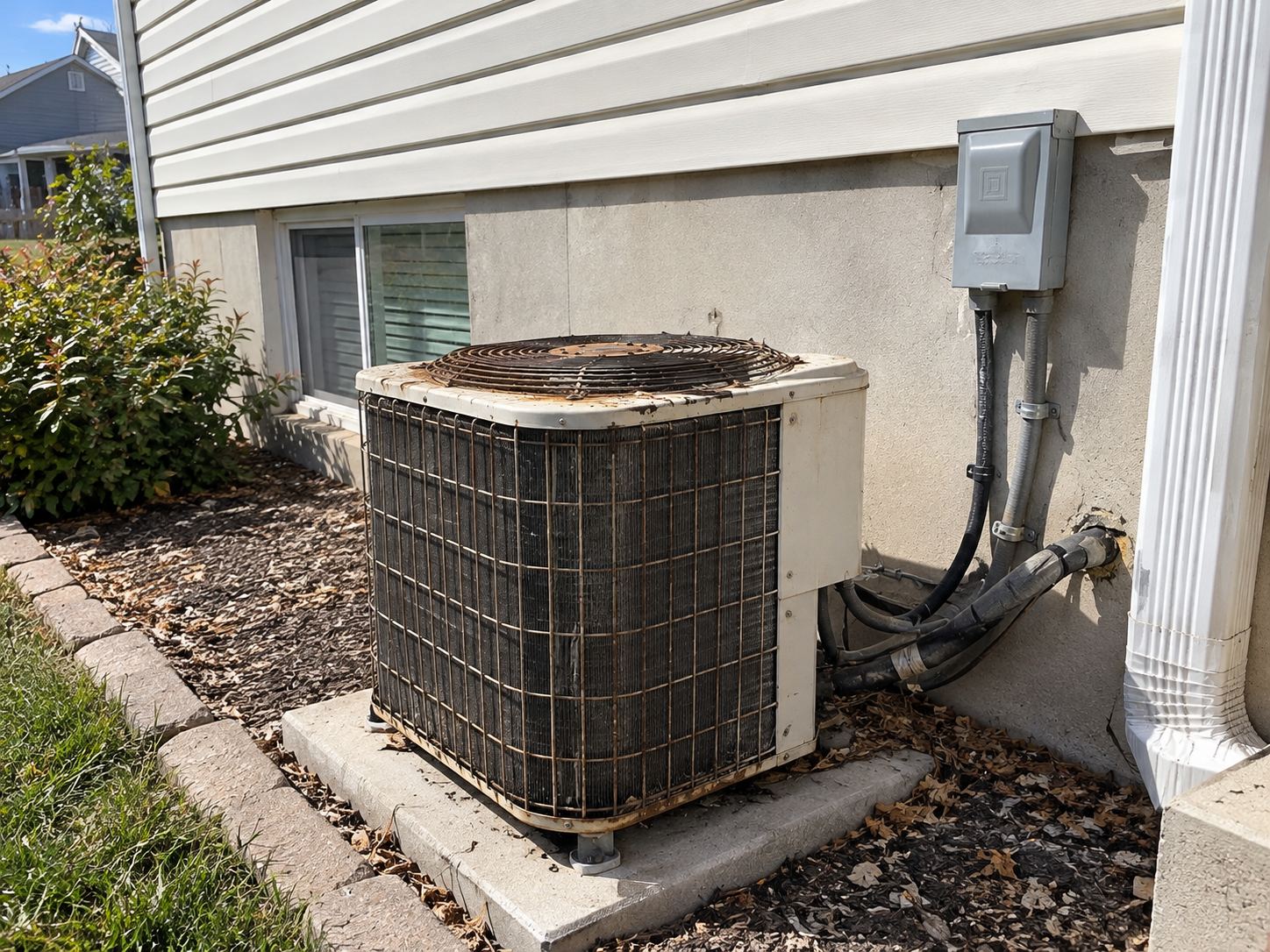
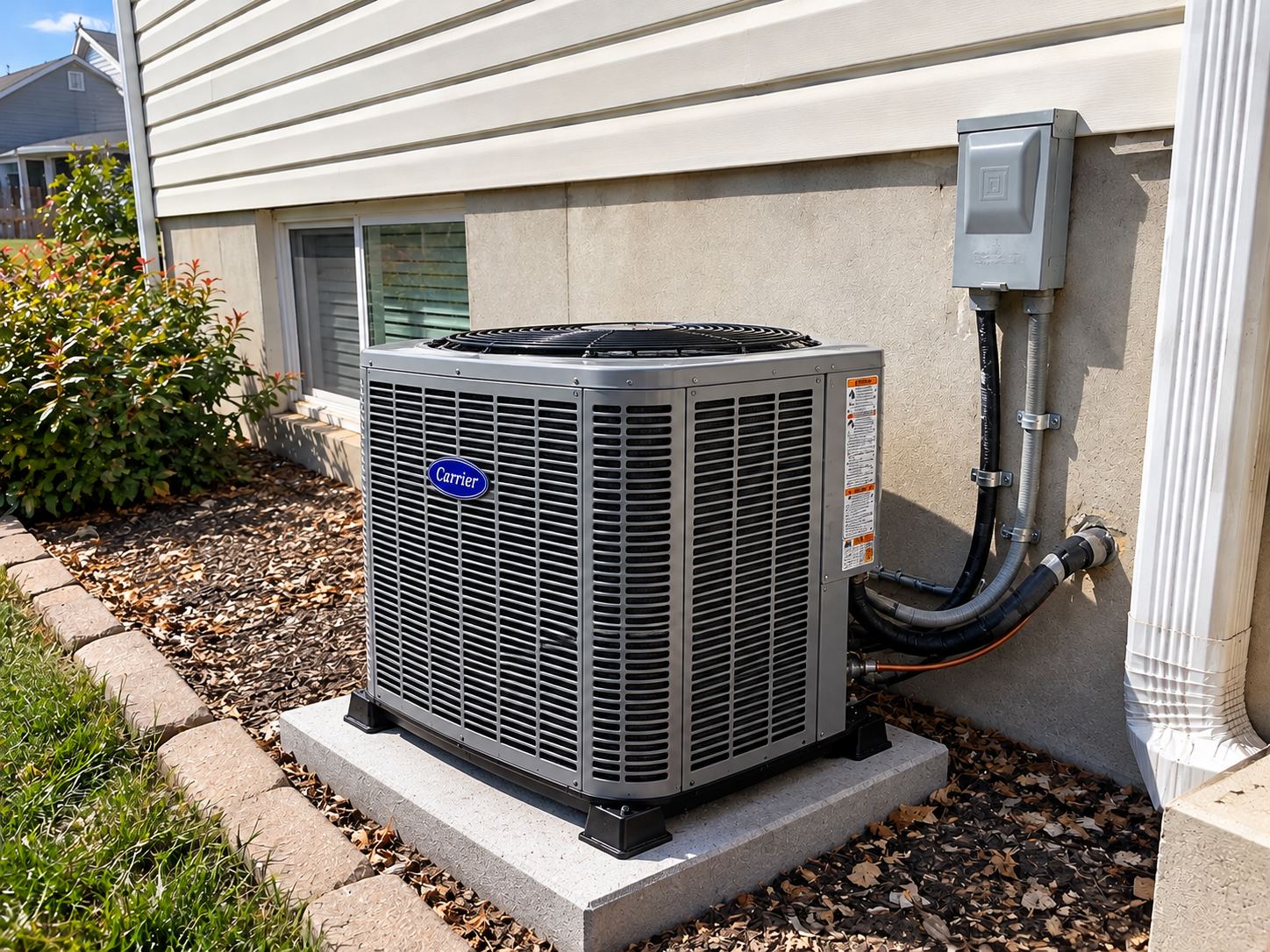
A Kearns customer in a 1974-built split-level home contacted us about adding central AC. The home had been operating with a swamp cooler for summer cooling — adequate during the customer’s early years in the home but increasingly insufficient as summers grew hotter and the customer’s preferences shifted toward modern comfort expectations. Split-level homes have specific cooling considerations that single-story or conventional two-story homes don’t share — multiple floor levels with stack-effect heat migration, distribution challenges between levels, and supply/return airflow patterns that don’t always work well with retrofit AC additions.
This case study documents the AC addition project from initial assessment through commissioning, with specific attention to the split-level considerations that affected equipment selection and installation approach.
Customer Situation
- Home: 1974-built split-level Kearns home, approximately 1,650 sq ft across 3 levels (lower level, main level, upper bedroom level)
- Existing equipment: 80% AFUE atmospheric-vent furnace (1990s replacement, still functional), rooftop swamp cooler
- Symptom: Swamp cooler inadequate during hot weather; upstairs bedroom level uncomfortably warm; humidity uncomfortable during humid periods
- Customer priorities: Adequate cooling across all levels, remove swamp cooler (aging and adds humidity), comfortable bedrooms for sleeping
Split-Level Considerations
Split-level homes have specific cooling characteristics requiring attention during AC installation:
Stack effect: – Hot air rises naturally to upper bedroom level – During cooling, this means upper level receives less benefit from cool air introduced at lower levels – Often produces upper level 5–8°F warmer than main level even with adequate equipment
Distribution challenges: – Existing ductwork in this home served the furnace in the lower level – Supply registers on each level – Returns on each level (lower and main) – Upper bedroom level supplies adequate but return air relied on hallway flow back to main-level returns
Supply/return balance: – Distribution issues sometimes resolved with zoning (separate zones for upper bedroom level and main/lower) – Customer’s preference was single-zone simpler operation rather than zoning complexity
Manual J Load Calculation
On-site Manual J with attention to per-level loads:
- Total conditioned area: 1,650 sq ft
- Lower level: 550 sq ft (mostly below grade, lower cooling load)
- Main level: 600 sq ft (kitchen, living, dining)
- Upper level: 500 sq ft (3 bedrooms, bath)
- Insulation: R-13 walls, R-30 attic (1990s upgrade)
- Windows: 215 sq ft vinyl double-pane
- Salt Lake design conditions: 96°F cooling
Manual J results: – Total cooling load: 24,800 BTU/h (2.1 tons) – Recommended equipment size: 2.5 tons (Goodman 30,000 BTU/h nominal)
The customer asked whether 3 ton would provide better cooling on hot days. We explained that oversizing reduces dehumidification and produces short-cycling that actually feels worse during humid weather. Right-sized 2.5 ton with longer run cycles provides better cooling and dehumidification than oversized 3 ton with shorter cycles.
Equipment Selection
Three equipment tiers discussed:
Option 1: 14.3 SEER2 single-stage (Goodman GLXS3BA3010) — $7,200 installed (including AC addition work) Option 2: 16 SEER2 two-stage (Trane XR16) — $9,400 installed Option 3: 18 SEER2 variable-speed (Trane XV18) — $13,500 installed
Customer selected Option 2 (Trane XR16 two-stage). The two-stage operation provides better dehumidification — particularly relevant for replacing humidifying swamp cooler with dehumidifying refrigeration cooling.
AC Addition Scope
The project involved more than just outdoor unit installation:
Work scope:
- Existing swamp cooler removal — disconnect water lines, electrical, drain system; remove rooftop unit; patch and seal roof penetrations
- Evaporator coil installation in plenum above existing furnace
- Outdoor condenser placement on new concrete pad (existing yard space, customer specified location away from bedroom windows)
- Refrigerant line set routing through wall cavity (interior chase, not exterior)
- Electrical service evaluation — existing 150-amp service adequate for AC addition
- New 240V circuit for AC condenser
- Condensate drainage from evaporator coil to existing floor drain (gravity drain available)
- Thermostat upgrade — replace heating-only thermostat with cooling-compatible smart thermostat
- Ductwork inspection — existing ductwork adequate for AC airflow, no modifications needed
- Insulation check on supply ducts in unconditioned spaces — added insulation to one attic run that had degraded
Installation Day
Crew: Travis Hollings (lead installer), Mike Reyes (assistant)
Duration: 1.5 days
Day 1 (full day): – Swamp cooler removal and roof repair – Evaporator coil installation above furnace – Refrigerant line set routing through wall cavity – Outdoor unit pad preparation and installation – Electrical work (new 240V circuit)
Day 2 (half day): – Refrigerant connections with nitrogen purge during brazing – System evacuation to 425 microns held 30 minutes – Refrigerant charging by weight (8 lbs 8 oz R-410A per manufacturer spec for line set length) – Electrical connections finalized – Smart thermostat installation and configuration – Commissioning measurements
Commissioning Measurements
After 25 minutes of run-time stabilization:
- Outdoor temperature: 86°F
- Main level temperature: 75°F (setpoint 74°F)
- Suction pressure: 138 psi ✓
- Discharge pressure: 348 psi ✓
- Subcool: 11°F ✓
- Temperature differential across evaporator coil: 19°F ✓
- Compressor amp draw stage 2: 10.6 amps ✓
- Static pressure: 0.43″ wc (within manufacturer spec) ✓
Per-level temperature verification (after 90 minutes of operation): – Lower level: 73°F (1°F below setpoint, expected — cooler air settles) – Main level: 74°F (at setpoint) – Upper bedroom level: 77°F (3°F above setpoint)
The 3°F upper level differential is typical for split-level homes with single-zone AC — significantly better than the 5–8°F differential the customer experienced with swamp cooler operation but not eliminated entirely. We discussed the option of zoning for future improvement if the differential becomes uncomfortable; customer decided to live with current configuration and add zoning later if needed.
Final Cost and Rebate Filing
Customer’s project cost: – AC equipment and installation: $9,400 – Less maintenance plan enrollment discount: -$100 – Net invoice: $9,300
Rebates filed on customer’s behalf: – Federal 25C tax credit: $600 – Rocky Mountain Power Wattsmart AC rebate: $150
Total incentives: $750
Effective net cost after incentives: $8,550
Customer Outcome
First-summer feedback: – Main level comfortable throughout summer, no complaints – Upper bedroom level acceptable — slightly warmer than main level but within tolerance for sleeping comfort – Indoor humidity averaged 50% (vs. 65% with swamp cooler) — significantly improved comfort feel – Electric bills $40/month higher than swamp cooler operation (expected — refrigeration cooling uses more electricity than evaporative) – Customer specifically appreciated dehumidification and consistent comfort
Customer’s overall assessment: “The upstairs being slightly warmer is fine — much better than the swamp cooler era and we sleep with bedroom doors open for air circulation.”
What This Case Study Demonstrates
- Split-level cooling considerations — stack effect produces upper-level differential that single-zone AC can’t eliminate, but right-sized equipment substantially improves comfort vs. swamp cooler
- Manual J right-sizing — recommended 2.5 ton with proper dehumidification rather than oversized 3 ton with short-cycling
- Swamp cooler removal scope — proper removal includes roof repair and verification of related systems, not just disconnecting the unit
- Honest expectations — customer informed before installation that single-zone AC in split-level produces some upper-level differential; outcome matched expectations
- Two-stage equipment value — particularly relevant when transitioning from humidifying swamp cooler to dehumidifying refrigeration
- Optional zoning discussion — presented as future improvement if needed, not required for adequate comfort
Considering a Similar Project?
If you’re considering AC addition in a Kearns split-level or other home, contact us or call (385) 250-0687. We perform Manual J load calculations with attention to per-level distribution considerations, discuss zoning options where appropriate, and provide written quotes with rebate-adjusted net cost analysis.
- Phone: (385) 250-0687
- Address: 4454 Manhattan Ct, West Valley City, UT 84120
See AC Installation in Kearns →
Aegis services in Kearns
AC repair · AC installation · Furnace repair · Furnace installation · Heat pumps · Ductless mini-splits · Maintenance · Indoor air quality · Commercial HVAC · Emergency HVAC · All of Kearns